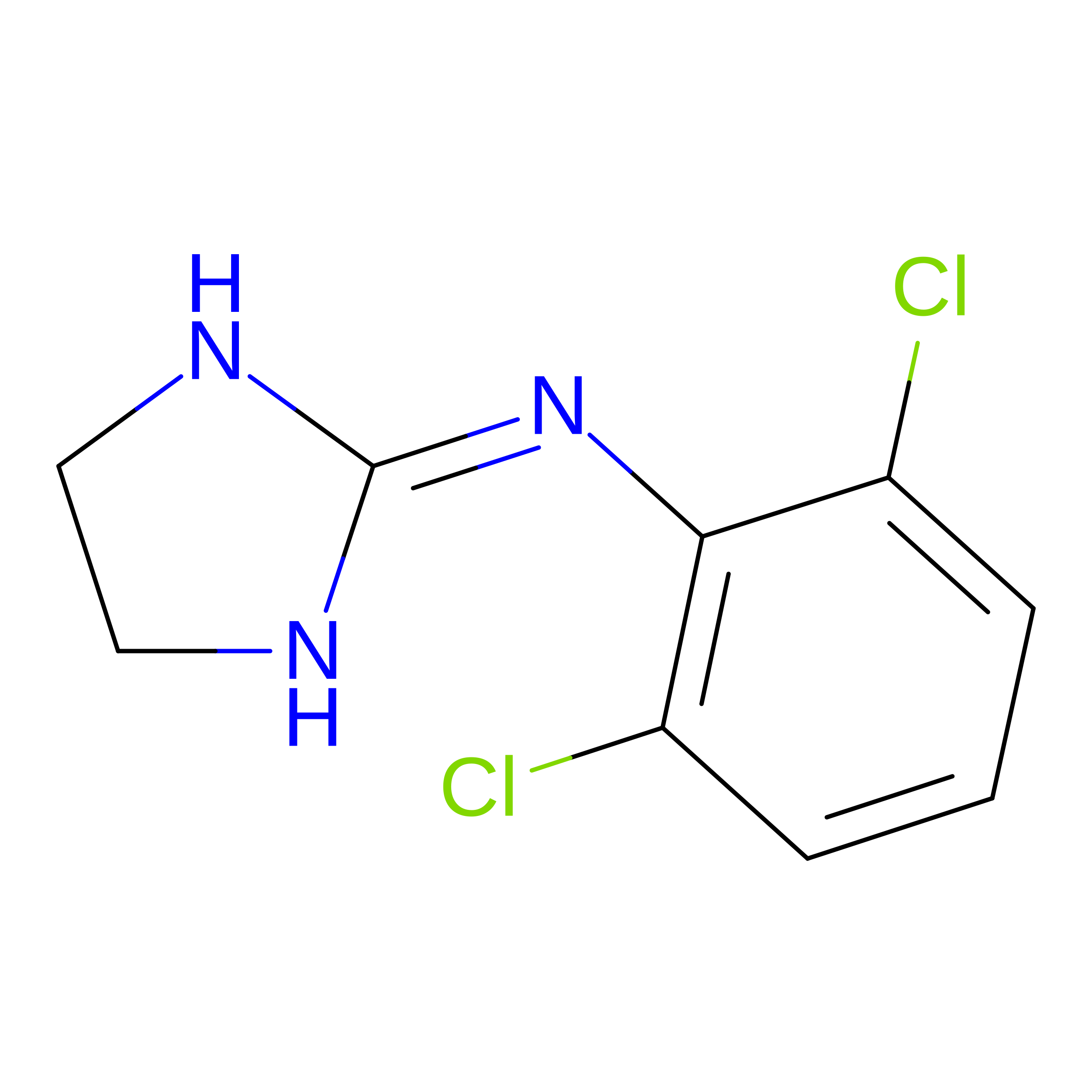
Clonidine is an imidazole derivate that acts as an agonist of alpha-2 adrenoceptors.[A180559] This activity is useful for the treatment of hypertension, severe pain, and ADHD.[L7237,L54536,L7240,L7243,L7246] Clonidine was granted FDA approval on 3 September 1974.[L7237]
Synonyms
2,6-Dichloro-N-2-imidazolidinylidenebenzenamine
Chlofazoline
Clonidine hydrochloride
Clonidinum
Clonidina
Clonidin
2-((2,6-Dichlorophenyl)imino)imidazolidine
Clonidine
Brand Names
Clonidine Hydrochloride Extended-Release
Clonidine Transdermal System USP, 0.2 mg/day
Teva-clonidine
Mar-clonidine
Onyda XR
Apo-clonidine Tab 0.1mg
Clonidine HCl Tab 0.2mg
Clonidine 0.1
Ntp-clonidine
Catapres-TTS
Clonidine hydrochloride extended-release
Sandoz Clonidine
Combipres 0.1/15 Tab
Catapres Tab 0.2mg
Clonidine
Clonidine transdermal system
Mint-clonidine
Catapres-TTS-3
Nu-clonidine Tab 0.2mg
Nexiclon XR
Clonidine Transdermal System USP, 0.3 mg/day
Clonidine Hydrochloride
Clonidine HYDROCHLORIDE
Apo-clonidine Tab 0.2mg
Apo-clonidine
Dom-clonidine
Clonidine Transdermal System USP, 0.1 mg/day
Javadin
Clorpres
Catapres Tab 0.1mg
Catapres
Catapres-TTS-2
Kapvay
Duraclon
Nexiclon
Nu-clonidine Tab 0.1mg
Clonidine hydrochloride
Dixarit Tab 0.025mg
Jamp Clonidine
Clonidine Hci
Catapres-TTS-1
Indication
Clonidine tablets, oral solution and transdermal systems are indicated for the treatment of hypertension alone or in combination with other medications.[L7237,L7240, L54536] A clonidine injection is indicated for use with opiates in the treatment of severe cancer pain where opiates alone are insufficient.[L7243] An extended-release tablet of clonidine is indicated for the treatment of ADHD, either alone or in combination with other medications.[L7246] Clonidine is also used for the diagnosis of pheochromocytoma,[A180565] treatment of nicotine dependance,[A180568] and opiate withdrawal.[A180571] Additionally, clonidine is also indicated for the treatment of Attention Deficit Hyperactivity Disorder (ADHD) as a monotherapy or as an adjunctive therapy to central nervous system (CNS) stimulant medications in pediatric patients 6 years of age and older.[L52295,L52300]
Categories
Adrenergic Agents
Adrenergic Agonists
Adrenergic alpha-1 Receptor Agonists
Adrenergic alpha-2 Receptor Agonists
Adrenergic alpha-Agonists
Agents producing tachycardia
Agents that produce hypertension
Analgesics
Anesthetics
Anesthetics, General
Antiadrenergic Agents, Centrally Acting
Antiglaucoma Preparations and Miotics
Antihypertensive Agents
Antihypertensive Agents Indicated for Hypertension
Antimigraine Preparations
Autonomic Agents
Bradycardia-Causing Agents
Cardiovascular Agents
Central alpha-2 Adrenergic Agonist
Central Alpha-agonists
Central Nervous System Agents
Central Nervous System Depressants
Cytochrome P-450 CYP1A1 Substrates
Cytochrome P-450 CYP1A2 Substrates
Cytochrome P-450 CYP1A2 Substrates with a Narrow Therapeutic Index
Cytochrome P-450 CYP2D6 Substrates
Cytochrome P-450 CYP2D6 Substrates with a Narrow Therapeutic Index
Cytochrome P-450 CYP3A Substrates
Cytochrome P-450 CYP3A4 Substrates
Cytochrome P-450 CYP3A4 Substrates with a Narrow Therapeutic Index
Cytochrome P-450 CYP3A5 Substrates
Cytochrome P-450 CYP3A5 Substrates with a Narrow Therapeutic Index
Drug Info/Drug Targets: DrugBank 3.0: a comprehensive resource for 'omics' research on drugs. Knox C, Law V, Jewison
T, Liu P, Ly S, Frolkis A, Pon A, Banco K, Mak C, Neveu V, Djoumbou Y, Eisner R, Guo AC, Wishart DS.
Nucleic Acids Res. 2011 Jan; 39 (Database issue):D1035-41. | PMID:21059682