Download Mendeley
Chiral recognition of 2,3-dihydroxypropanesulfonate by bacterial transport proteins adapted to distinct ecological niches.
Barber, H., Borusak, S., Stewart, A.W.E., Tahir, H., Scott, N.E., Schleheck, D., Lee, M., Williams, S.J.(2026) Chem Sci
- PubMed: 42441157 Search on PubMedSearch on PubMed Central
- DOI: https://doi.org/10.1039/d6sc02372j
- Primary Citation Related Structures:
24GC, 24GD, 24GE, 24GF, 24GG, 24GH - PubMed Abstract:
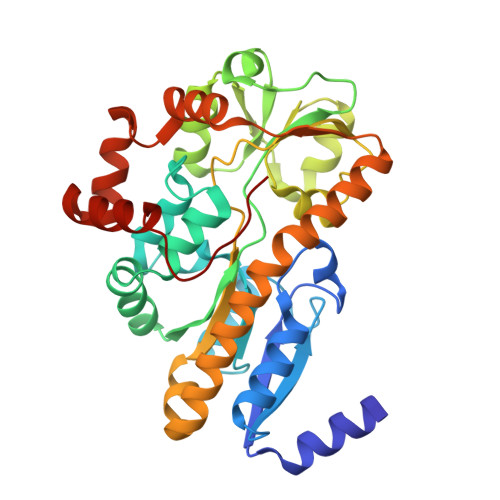
Bacterial catabolism of 2,3-dihydroxypropanesulfonate (DHPS) links algal production to marine degradation and connects sulfosugar metabolism to sulfide production in the gut. In surface seawater, DHPS occurs as a dilute, mixed R / S pool, whereas in the anaerobic gut it is produced predominantly as S -DHPS through bacterial sulfoglycolysis pathways. Uptake is achieved via tripartite ATP-independent periplasmic (TRAP) transporters that employ periplasmic substrate-binding proteins (HpsK), but the molecular basis of enantiomer recognition has not been defined. Here, we compare HpsK proteins from the marine bacterium Ruegeria pomeroyi and the gut anaerobe Bilophila wadsworthia using proteomics, biophysical analysis, X-ray crystallography, and bioinformatics. Rp HpsK binds both R - and S -DHPS with low-nanomolar affinity ( K D 5-9 nM), whereas Bw HpsK binds selectively to S -DHPS ( K D 530 nM), representing an ∼100-fold difference in affinity and strict stereoselectivity. Crystal structures reveal two contrasting strategies for chiral recognition: Rp HpsK accommodates both enantiomers through subtle side-chain "toggling" within an otherwise conserved binding pocket, whereas Bw HpsK achieves stereoselectivity through a distinct hydrogen-bonding network and a binding site that sterically excludes R -DHPS. Sequence similarity and genome neighbourhood analyses place these proteins in separate clusters associated with oxidative (HpsNOP) or glycyl radical enzyme-linked (HpsGH/HpfGH) pathways. These findings show how changes in binding-site architecture tune ligand stereoselectivity and illustrate the adaptation of TRAP-associated substrate binding proteins to distinct ecological and metabolic niches.
- Manchester Institute of Biotechnology, University of Manchester 131 Princess Street Manchester M1 7DN UK.
Organizational Affiliation: