4L1T | pdb_00004l1t

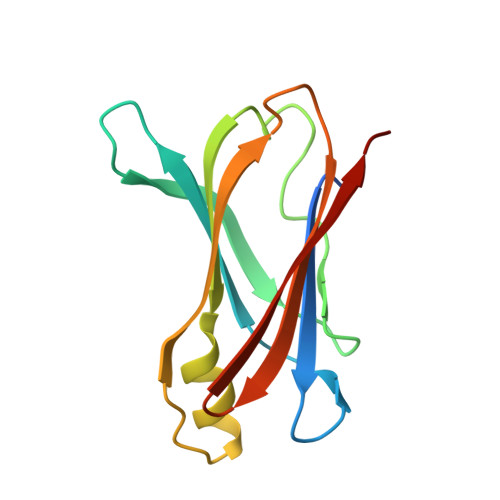
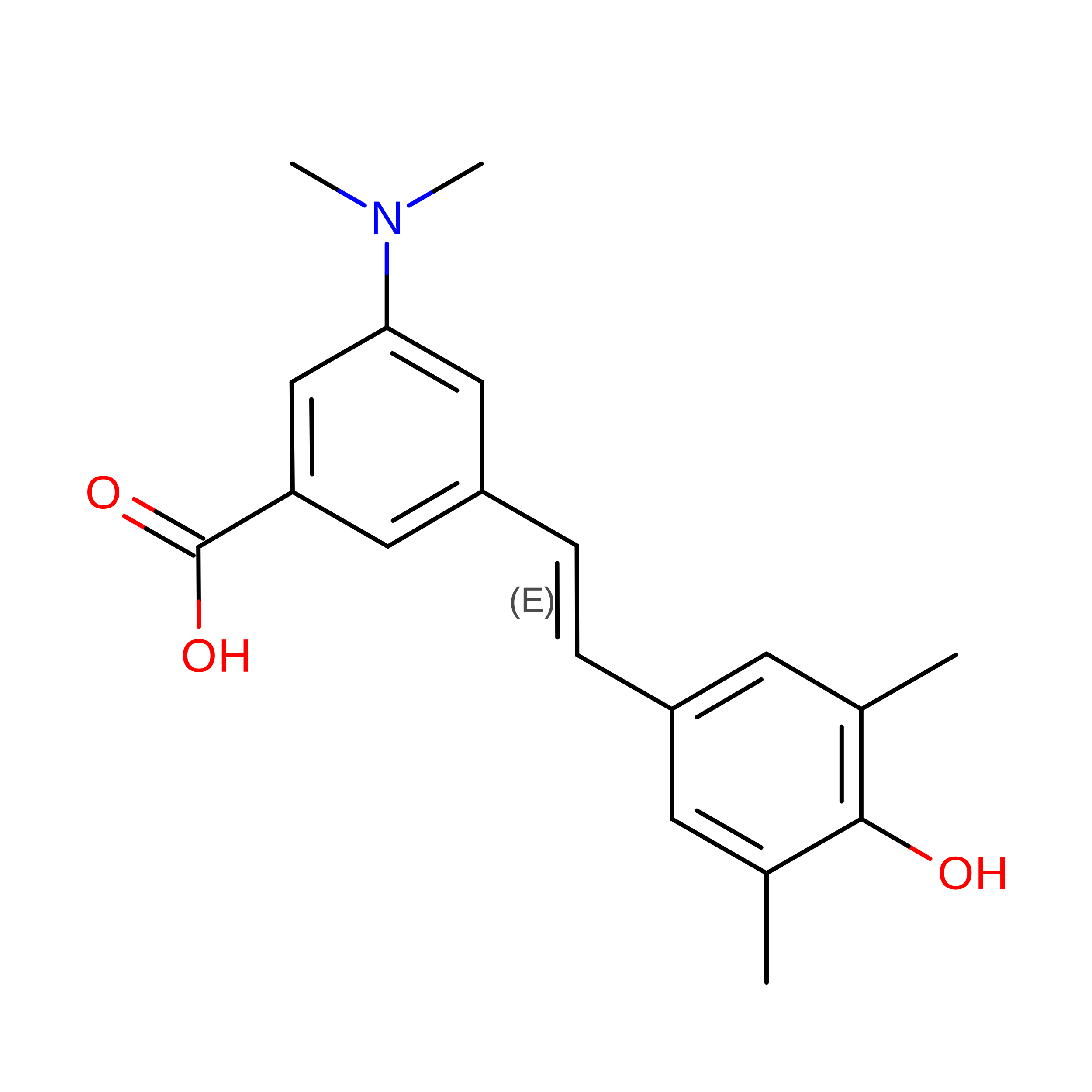
Transthyretin in complex with (E)-3-(dimethylamino)-5-(4-hydroxy-3,5-dimethylstyryl)benzoic acid


Experimental Data Snapshot

  • Method: X-RAY DIFFRACTION
  • Resolution: 1.16 Å
  • R-Value Free: 
    0.188 (Depositor), 0.190 (DCC) 
  • R-Value Work: 
    0.164 (Depositor), 0.166 (DCC) 
  • R-Value Observed: 
    0.165 (Depositor) 

Starting Model: experimental
View more details

wwPDB Validation 3D Report Full Report

Validation slider image for 4L1T

Ligand Structure Quality Assessment 


This is version 1.3 of the entry. See complete history

Literature

Fluorogenic small molecules requiring reaction with a specific protein to create a fluorescent conjugate for biological imaging-what we know and what we need to learn.

Baranczak, A.Connelly, S.Liu, Y.Choi, S.Grimster, N.P.Powers, E.T.Wilson, I.A.Kelly, J.W.

(2014) Biopolymers 101: 484-495

  • DOI: https://doi.org/10.1002/bip.22407
  • Primary Citation Related Structures: 
    4L1S, 4L1T

  • PubMed Abstract: 

    We seek fluorogenic small molecules that generate a fluorescent conjugate signal if and only if they react with a given protein-of-interest (i.e., small molecules for which noncovalent binding to the protein-of-interest is insufficient to generate fluorescence). Consequently, it is the new chemical entity afforded by the generally irreversible reaction between the small molecule and the protein-of-interest that enables the energy of an electron occupying the lowest unoccupied molecular orbital (LUMO) of the chromophore to be given off as a photon instead of being dissipated by nonradiative mechanisms in complex biological environments. This category of fluorogenic small molecules is created by starting with environmentally sensitive fluorophores that are modified by an essential functional group that efficiently quenches the fluorescence until a chemoselective reaction between that functional group and the protein-of-interest occurs, yielding the fluorescent conjugate. Fluorogenic small molecules are envisioned to be useful for a wide variety of applications, including live cell imaging without the requirement for washing steps and pulse-chase kinetic analyses of protein synthesis, trafficking, degradation, etc.


  • Organizational Affiliation
    • Department of Chemistry, The Skaggs Institute for Chemical Biology, The Scripps Research Institute, La Jolla, CA, 92037; Department of Molecular and Experimental Medicine, The Scripps Research Institute, La Jolla, CA, 92037.

Macromolecule Content 

  • Total Structure Weight: 28.18 kDa 
  • Atom Count: 2,160 
  • Modeled Residue Count: 231 
  • Deposited Residue Count: 254 
  • Unique protein chains: 1

Macromolecules

Find similar proteins by:|  3D Structure
Entity ID: 1
MoleculeChains  Sequence LengthOrganismDetailsImage
Transthyretin
A, B
127Homo sapiensMutation(s): 0 
Gene Names: TTRPALB
UniProt & NIH Common Fund Data Resources
Find proteins for P02766 (Homo sapiens)
Explore P02766 
Go to UniProtKB:  P02766
PHAROS:  P02766
GTEx:  ENSG00000118271 
Entity Groups
Sequence Clusters30% Identity50% Identity70% Identity90% Identity95% Identity100% Identity
UniProt GroupP02766
Sequence Annotations
Expand
Reference Sequence

Small Molecules

Ligands 1 Unique
IDChains Name / Formula / InChI Key2D Diagram3D Interactions
1WZ

Query on 1WZ


Download:Ideal Coordinates CCD File
C [auth A],
D [auth B]
3-(dimethylamino)-5-[(E)-2-(4-hydroxy-3,5-dimethylphenyl)ethenyl]benzoic acid
C19 H21 N O3
BYKHVGHURSEPRX-AATRIKPKSA-N

Experimental Data & Validation

Experimental Data

  • Method: X-RAY DIFFRACTION
  • Resolution: 1.16 Å
  • R-Value Free:  0.188 (Depositor), 0.190 (DCC) 
  • R-Value Work:  0.164 (Depositor), 0.166 (DCC) 
  • R-Value Observed: 0.165 (Depositor) 
Space Group: P 21 21 2
Unit Cell:
Length ( Å )Angle ( ˚ )
a = 42.305α = 90
b = 85.551β = 90
c = 63.006γ = 90
Software Package:
Software NamePurpose
REFMACrefinement
PDB_EXTRACTdata extraction
Blu-Icedata collection
XDSdata reduction
XDSdata scaling
PHASERphasing

Structure Validation

View Full Validation Report


Ligand Structure Quality Assessment 


Entry History 

Deposition Data

Revision History  (Full details and data files)

  • Version 1.0: 2013-10-02
    Type: Initial release
  • Version 1.1: 2014-02-05
    Changes: Database references
  • Version 1.2: 2014-08-20
    Changes: Database references
  • Version 1.3: 2023-09-20
    Changes: Data collection, Database references, Derived calculations, Refinement description