7EVB | pdb_00007evb

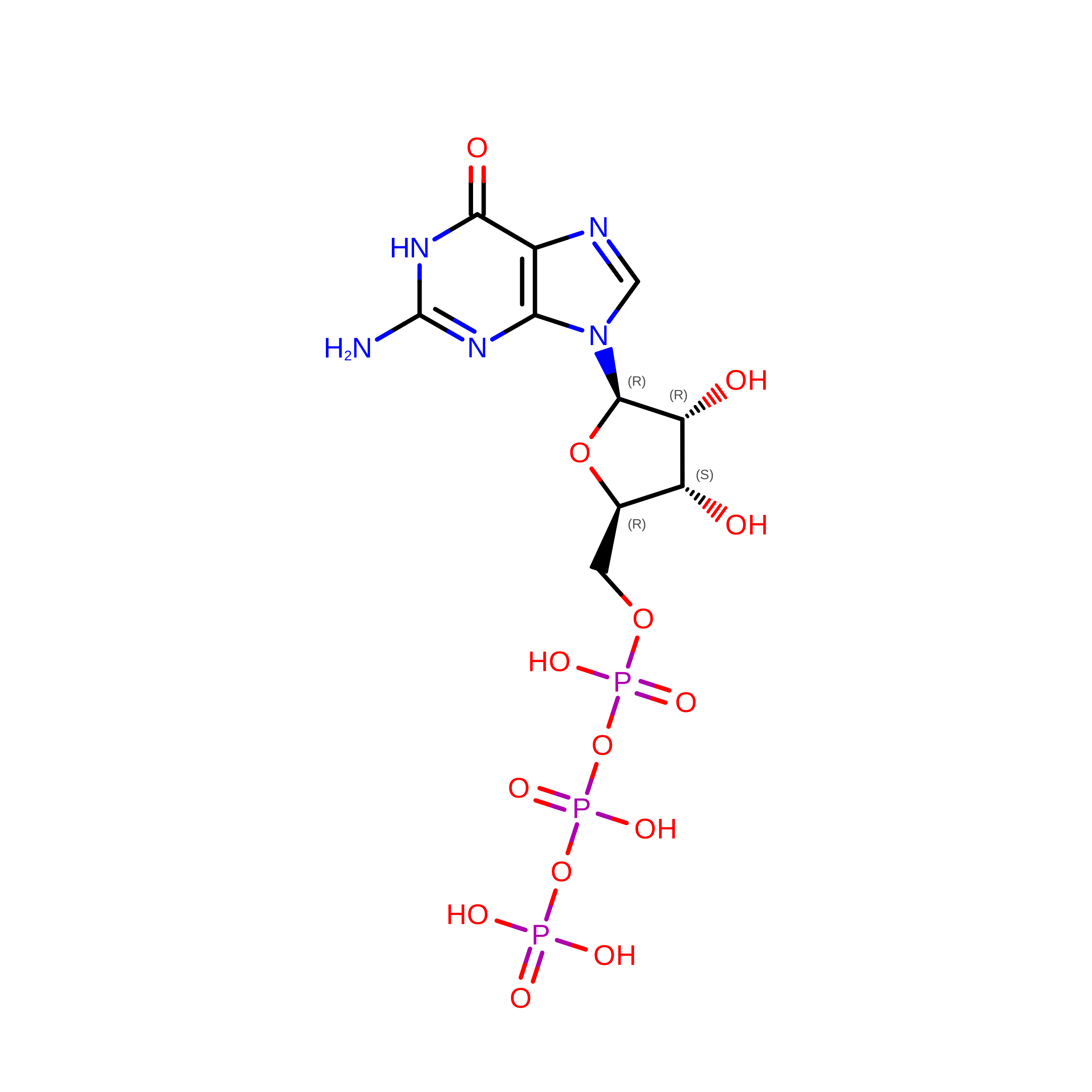
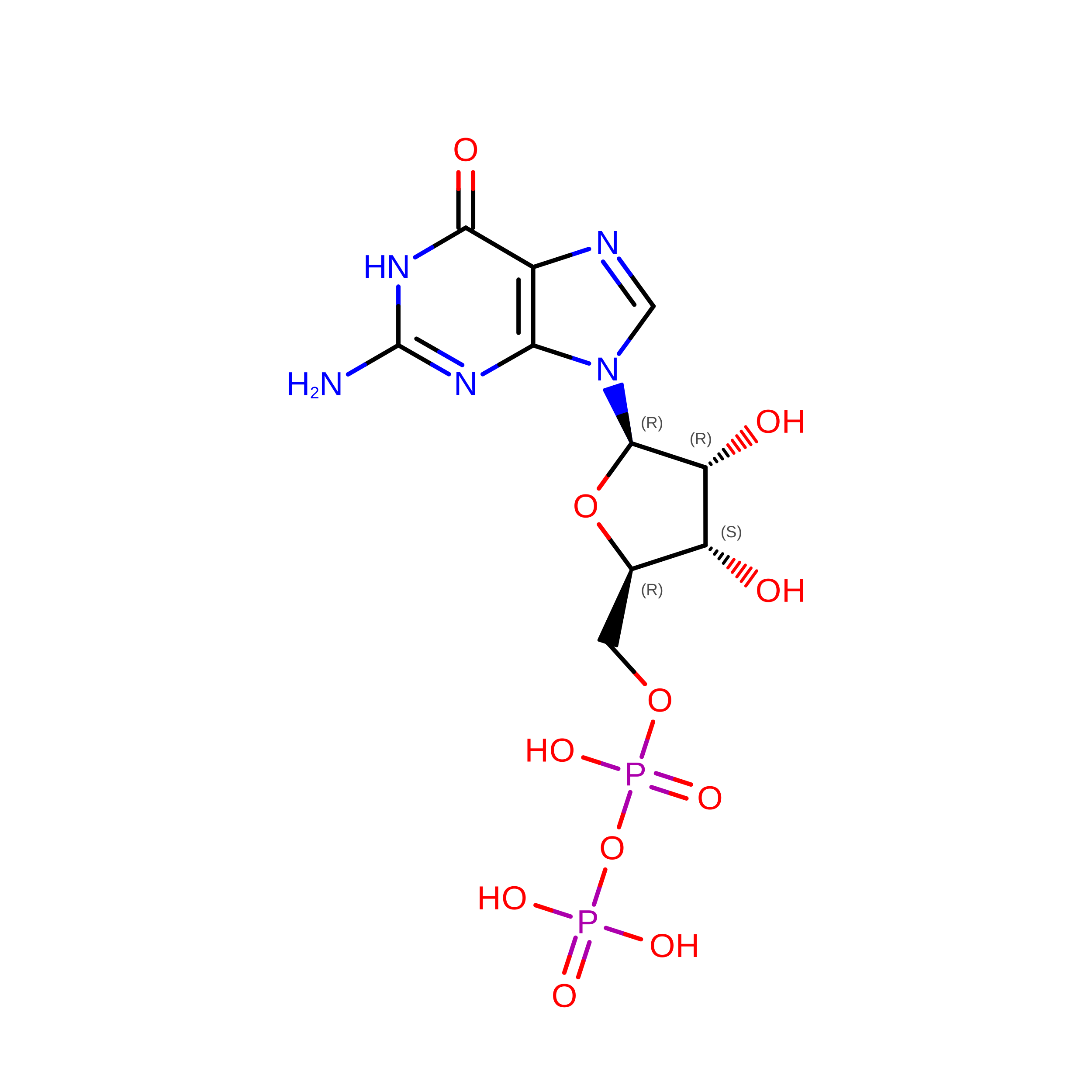
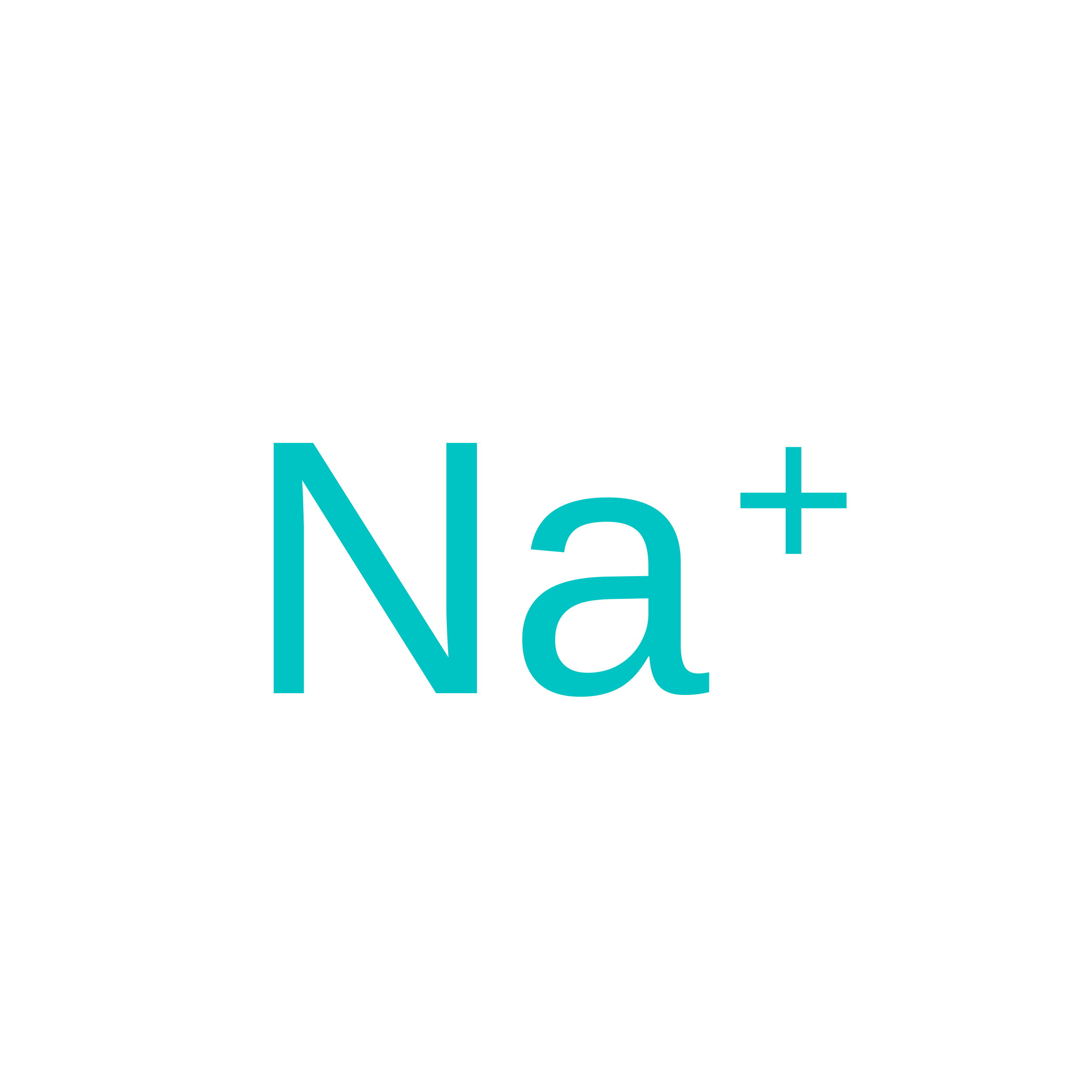
Odinarchaeota tubulin (OdinTubulin) H393D mutant, in a protofilament arrangement, bound to 77% GTP/23% and 2 Na+


Experimental Data Snapshot

  • Method: X-RAY DIFFRACTION
  • Resolution: 1.62 Å
  • R-Value Free: 
    0.177 (Depositor), 0.177 (DCC) 
  • R-Value Work: 
    0.153 (Depositor), 0.153 (DCC) 

Starting Model: experimental
View more details

wwPDB Validation 3D Report Full Report

Validation slider image for 7EVB

Ligand Structure Quality Assessment 


This is version 1.3 of the entry. See complete history

Literature

Structure and dynamics of Odinarchaeota tubulin and the implications for eukaryotic microtubule evolution.

Akil, C.Ali, S.Tran, L.T.Gaillard, J.Li, W.Hayashida, K.Hirose, M.Kato, T.Oshima, A.Fujishima, K.Blanchoin, L.Narita, A.Robinson, R.C.

(2022) Sci Adv 8: eabm2225-eabm2225

  • DOI: https://doi.org/10.1126/sciadv.abm2225
  • Primary Citation Related Structures: 
    7EVB, 7EVC, 7EVD, 7EVE, 7EVG, 7EVH, 7EVI, 7EVK, 7EVL, 7F1A, 7F1B

  • PubMed Abstract: 

    Tubulins are critical for the internal organization of eukaryotic cells, and understanding their emergence is an important question in eukaryogenesis. Asgard archaea are the closest known prokaryotic relatives to eukaryotes. Here, we elucidated the apo and nucleotide-bound x-ray structures of an Asgard tubulin from hydrothermal living Odinarchaeota (OdinTubulin). The guanosine 5'-triphosphate (GTP)-bound structure resembles a microtubule protofilament, with GTP bound between subunits, coordinating the "+" end subunit through a network of water molecules and unexpectedly by two cations. A water molecule is located suitable for GTP hydrolysis. Time course crystallography and electron microscopy revealed conformational changes on GTP hydrolysis. OdinTubulin forms tubules at high temperatures, with short curved protofilaments coiling around the tubule circumference, more similar to FtsZ, rather than running parallel to its length, as in microtubules. Thus, OdinTubulin represents an evolutionary stage intermediate between prokaryotic FtsZ and eukaryotic microtubule-forming tubulins.


  • Organizational Affiliation
    • Research Institute for Interdisciplinary Science, Okayama University, Okayama 700-8530, Japan.

Macromolecule Content 

  • Total Structure Weight: 48.65 kDa 
  • Atom Count: 3,934 
  • Modeled Residue Count: 422 
  • Deposited Residue Count: 425 
  • Unique protein chains: 1

Macromolecules

Find similar proteins by:|  3D Structure
Entity ID: 1
MoleculeChains  Sequence LengthOrganismDetailsImage
Tubulin-like proteinA [auth B]425Candidatus Odinarchaeum yellowstoniiMutation(s): 1 
Gene Names: cetZOdinLCB4_01330

Experimental Data & Validation

Experimental Data

  • Method: X-RAY DIFFRACTION
  • Resolution: 1.62 Å
  • R-Value Free:  0.177 (Depositor), 0.177 (DCC) 
  • R-Value Work:  0.153 (Depositor), 0.153 (DCC) 
Space Group: P 21 21 21
Unit Cell:
Length ( Å )Angle ( ˚ )
a = 40.327α = 90
b = 92.256β = 90
c = 103.06γ = 90
Software Package:
Software NamePurpose
PHENIXrefinement
HKL-2000data reduction
HKL-2000data scaling
PHASERphasing

Structure Validation

View Full Validation Report


Ligand Structure Quality Assessment 


Entry History 

& Funding Information

Deposition Data


Funding OrganizationLocationGrant Number
Japan Science and TechnologyJapanJPMJCR19S5
Japan Society for the Promotion of Science (JSPS)JapanJP20H00476
Simons FoundationUnited StatesGBMF9743
Other privateUnited StatesMoore Foundation GBMF9743

Revision History  (Full details and data files)

  • Version 1.0: 2022-03-23
    Type: Initial release
  • Version 1.1: 2022-06-15
    Changes: Database references
  • Version 1.2: 2023-11-29
    Changes: Data collection, Refinement description
  • Version 1.3: 2025-01-29
    Changes: Advisory, Structure summary