2A1D | pdb_00002a1d

Staphylocoagulase bound to bovine thrombin


Experimental Data Snapshot

  • Method: X-RAY DIFFRACTION
  • Resolution: 3.50 Å
  • R-Value Free: 
    0.306 (Depositor) 
  • R-Value Work: 
    0.233 (Depositor) 

Starting Model: other
View more details

wwPDB Validation 3D Report Full Report

Validation slider image for 2A1D

This is version 2.3 of the entry. See complete history

Literature

Structural Basis for Reduced Staphylocoagulase-mediated Bovine Prothrombin Activation

Friedrich, R.Panizzi, P.Kawabata, S.Bode, W.Bock, P.E.Fuentes-Prior, P.

(2006) J Biological Chem 281: 1188-1195

  • DOI: https://doi.org/10.1074/jbc.M507957200
  • Primary Citation Related Structures: 
    2A1D

  • PubMed Abstract: 

    Staphylocoagulase (SC) is a protein secreted by the human pathogen, Staphylococcus aureus, that activates human prothrombin (ProT) by inducing a conformational change. SC-bound ProT efficiently clots fibrinogen, thus bypassing the physiological blood coagulation pathway. The crystal structure of a fully active SC fragment, SC-(1-325), bound to human prethrombin 2 showed that the SC-(1-325) N terminus inserts into the Ile(16) pocket of prethrombin 2, thereby inducing expression of a functional catalytic site in the cognate zymogen without peptide bond cleavage. As shown here, SC-(1-325) binds to bovine and human ProT with similar affinity but activates the bovine zymogen only very poorly. By contrast to the approximately 2-fold difference in chromogenic substrate kinetic constants between human thrombin and the SC-(1-325).human (pro)thrombin complexes, SC-(1-325).bovine ProT shows a 3,500-fold lower k(cat)/K(m) compared with free bovine thrombin, because of a 47-fold increase in K(m) and a 67-fold decrease in k(cat). The SC-(1-325).bovine ProT complex is approximately 5,800-fold less active compared with its human counterpart. Comparison of human and bovine fibrinogen as substrates of human and bovine thrombin and the SC-(1-325).(pro)thrombin complexes indicates that the species specificity of SC-(1-325) cofactor activity is determined primarily by differences in conformational activation of bound ProT. These results suggest that the catalytic site in the SC-(1-325).bovine ProT complex is incompletely formed. The current crystal structure of SC-(1-325).bovine thrombin reveals that SC would dock similarly to the bovine proenzyme, whereas the bovine (pro)thrombin-characteristic residues Arg(144) and Arg(145) would likely interfere with insertion of the SC N terminus, thus explaining the greatly reduced activation of bovine ProT.


  • Organizational Affiliation
    • Proteinase Research Group, Max Planck Institute of Biochemistry, Martinsried, Germany.

Macromolecule Content 

  • Total Structure Weight: 147.39 kDa 
  • Atom Count: 9,634 
  • Modeled Residue Count: 1,164 
  • Deposited Residue Count: 1,258 
  • Unique protein chains: 3

Macromolecules

Find similar proteins by:|  3D Structure
Entity ID: 1
MoleculeChains  Sequence LengthOrganismDetailsImage
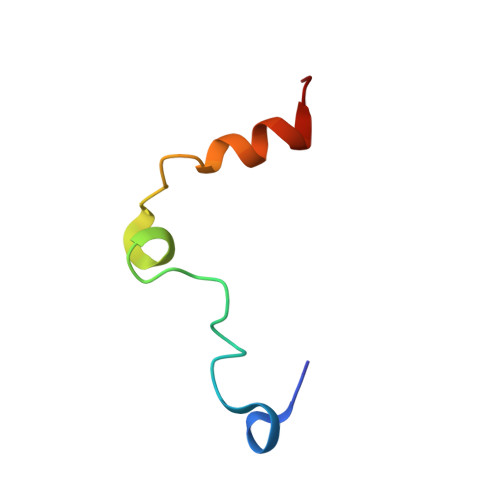
thrombinA,
D [auth E]
41Bos taurusMutation(s): 0 
EC: 3.4.21.5
UniProt
Find proteins for P00735 (Bos taurus)
Explore P00735 
Go to UniProtKB:  P00735
Entity Groups
Sequence Clusters30% Identity50% Identity70% Identity90% Identity95% Identity100% Identity
UniProt GroupP00735
Sequence Annotations
Expand
Reference Sequence
Find similar proteins by:|  3D Structure
Entity ID: 2
MoleculeChains  Sequence LengthOrganismDetailsImage
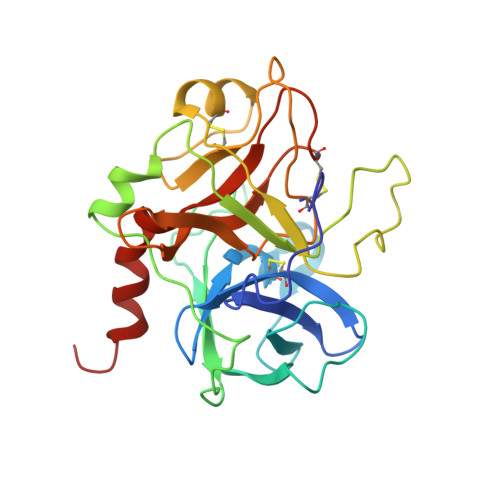
thrombinB,
E [auth F]
259Bos taurusMutation(s): 0 
EC: 3.4.21.5
UniProt
Find proteins for P00735 (Bos taurus)
Explore P00735 
Go to UniProtKB:  P00735
Entity Groups
Sequence Clusters30% Identity50% Identity70% Identity90% Identity95% Identity100% Identity
UniProt GroupP00735
Glycosylation
Glycosylation Sites: 1
Sequence Annotations
Expand
Reference Sequence
Find similar proteins by:|  3D Structure
Entity ID: 3
MoleculeChains  Sequence LengthOrganismDetailsImage
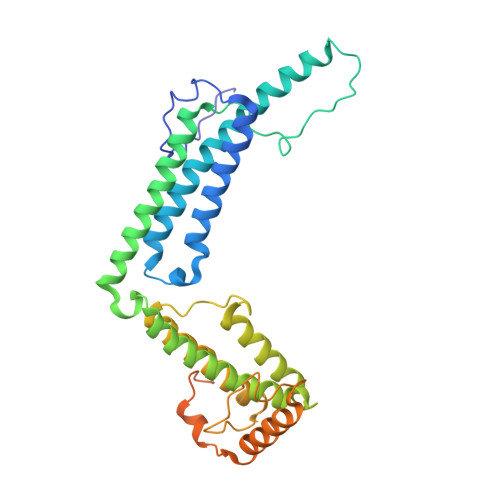
StaphylocoagulaseC [auth D],
F [auth H]
329Staphylococcus aureusMutation(s): 0 
UniProt
Find proteins for P17855 (Staphylococcus aureus)
Explore P17855 
Go to UniProtKB:  P17855
Entity Groups
Sequence Clusters30% Identity50% Identity70% Identity90% Identity95% Identity100% Identity
UniProt GroupP17855
Sequence Annotations
Expand
Reference Sequence

Small Molecules

Ligands 3 Unique
IDChains Name / Formula / InChI Key2D Diagram3D Interactions
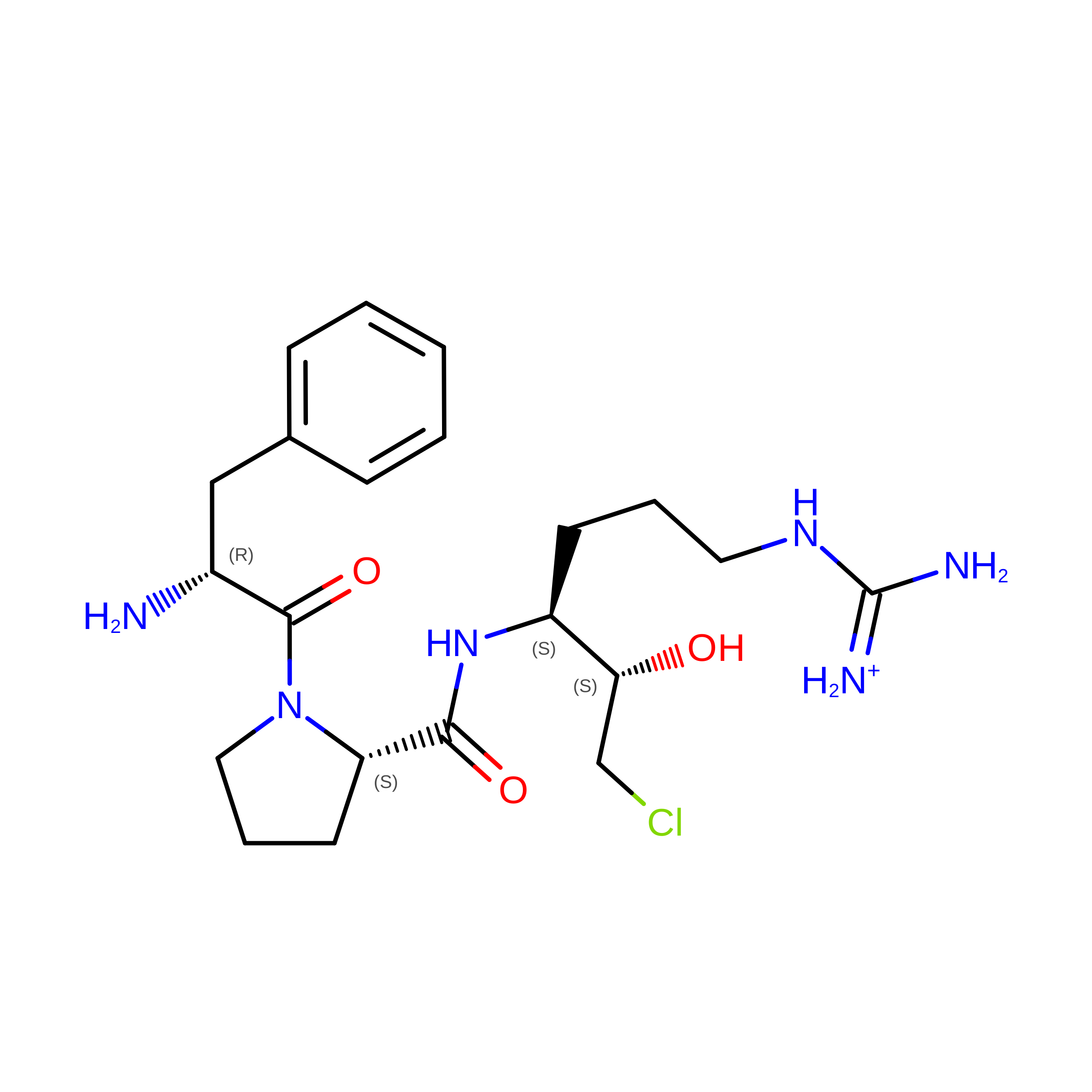
0G6

Query on 0G6


Download:Ideal Coordinates CCD File
G [auth B],
J [auth F]
D-phenylalanyl-N-[(2S,3S)-6-{[amino(iminio)methyl]amino}-1-chloro-2-hydroxyhexan-3-yl]-L-prolinamide
C21 H34 Cl N6 O3
DVFLYEYCMMLBTQ-VSZNYVQBSA-O
NAG

Query on NAG


Download:Ideal Coordinates CCD File
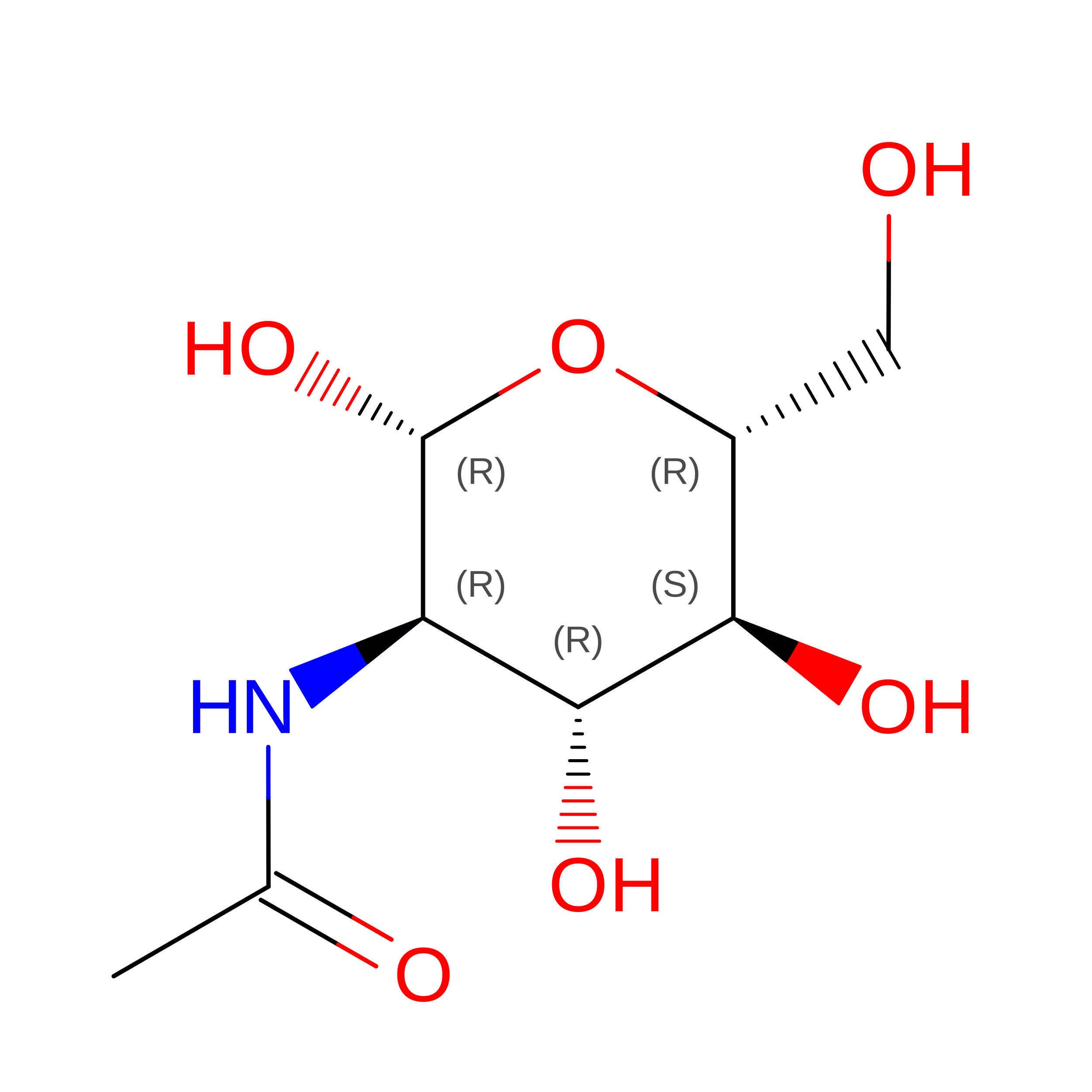
H [auth B]2-acetamido-2-deoxy-beta-D-glucopyranose
C8 H15 N O6
OVRNDRQMDRJTHS-FMDGEEDCSA-N
NA

Query on NA


Download:Ideal Coordinates CCD File
I [auth B],
K [auth F]
SODIUM ION
Na
FKNQFGJONOIPTF-UHFFFAOYSA-N

Biologically Interesting Molecules (External Reference) 

1 Unique
Entity ID: 4
IDChains NameType/Class2D Diagram3D Interactions
PRD_000020 (0G6)
Query on PRD_000020
G [auth B],
J [auth F]
D-Phe-Pro-Arg-CH2ClPeptide-like / Inhibitor

Experimental Data & Validation

Experimental Data

  • Method: X-RAY DIFFRACTION
  • Resolution: 3.50 Å
  • R-Value Free:  0.306 (Depositor) 
  • R-Value Work:  0.233 (Depositor) 
Space Group: C 1 2 1
Unit Cell:
Length ( Å )Angle ( ˚ )
a = 183.78α = 90
b = 102.54β = 129.14
c = 134.04γ = 90
Software Package:
Software NamePurpose
MOSFLMdata reduction
TRUNCATEdata reduction
AMoREphasing
CNSrefinement
CCP4data scaling

Structure Validation

View Full Validation Report


Entry History 

Deposition Data

Revision History  (Full details and data files)

  • Version 1.0: 2005-09-27
    Type: Initial release
  • Version 1.1: 2008-04-30
    Changes: Version format compliance
  • Version 1.2: 2011-07-13
    Changes: Atomic model, Database references, Derived calculations, Non-polymer description, Structure summary, Version format compliance
  • Version 1.3: 2013-02-27
    Changes: Other
  • Version 2.0: 2020-07-29
    Type: Remediation
    Reason: Carbohydrate remediation
    Changes: Advisory, Atomic model, Data collection, Database references, Derived calculations, Non-polymer description, Structure summary
  • Version 2.1: 2024-03-20
    Changes: Advisory, Data collection, Database references, Source and taxonomy, Structure summary
  • Version 2.2: 2024-04-03
    Changes: Refinement description
  • Version 2.3: 2024-10-30
    Changes: Structure summary