2XQT | pdb_00002xqt

Microscopic rotary mechanism of ion translocation in the Fo complex of ATP synthases


Experimental Data Snapshot

  • Method: X-RAY DIFFRACTION
  • Resolution: 2.20 Å
  • R-Value Free: 
    0.223 (Depositor), 0.221 (DCC) 
  • R-Value Work: 
    0.186 (Depositor), 0.190 (DCC) 
  • R-Value Observed: 
    0.188 (Depositor) 

Starting Model: experimental
View more details

wwPDB Validation 3D Report Full Report

Validation slider image for 2XQT

Ligand Structure Quality Assessment 


This is version 1.3 of the entry. See complete history

Literature

Microscopic Rotary Mechanism of Ion Translocation in the Fo Complex of ATP Synthases

Pogoryelov, D.Krah, A.Langer, J.Yildiz, O.Faraldo-Gomez, J.D.Meier, T.

(2010) Nat Chem Biol 6: 891

  • DOI: https://doi.org/10.1038/nchembio.457
  • Primary Citation Related Structures: 
    2XQS, 2XQT, 2XQU

  • PubMed Abstract: 

    The microscopic mechanism of coupled c-ring rotation and ion translocation in F(1)F(o)-ATP synthases is unknown. Here we present conclusive evidence supporting the notion that the ability of c-rings to rotate within the F(o) complex derives from the interplay between the ion-binding sites and their nonhomogenous microenvironment. This evidence rests on three atomic structures of the c(15) rotor from crystals grown at low pH, soaked at high pH and, after N,N'-dicyclohexylcarbodiimide (DCCD) modification, resolved at 1.8, 3.0 and 2.2 Å, respectively. Alongside a quantitative DCCD-labeling assay and free-energy molecular dynamics calculations, these data demonstrate how the thermodynamic stability of the so-called proton-locked state is maximized by the lipid membrane. By contrast, a hydrophilic environment at the a-subunit-c-ring interface appears to unlock the binding-site conformation and promotes proton exchange with the surrounding solution. Rotation thus occurs as c-subunits stochastically alternate between these environments, directionally biased by the electrochemical transmembrane gradient.


  • Organizational Affiliation
    • Department of Structural Biology, Max Planck Institute of Biophysics, Frankfurt am Main, Germany.

Macromolecule Content 

  • Total Structure Weight: 63.8 kDa 
  • Atom Count: 3,578 
  • Modeled Residue Count: 410 
  • Deposited Residue Count: 410 
  • Unique protein chains: 1

Macromolecules

Find similar proteins by:|  3D Structure
Entity ID: 1
MoleculeChains  Sequence LengthOrganismDetailsImage
ATP SYNTHASE C CHAIN
A, B, C, D, E
82Limnospira platensisMutation(s): 0 

Small Molecules

Ligands 2 Unique
IDChains Name / Formula / InChI Key2D Diagram3D Interactions
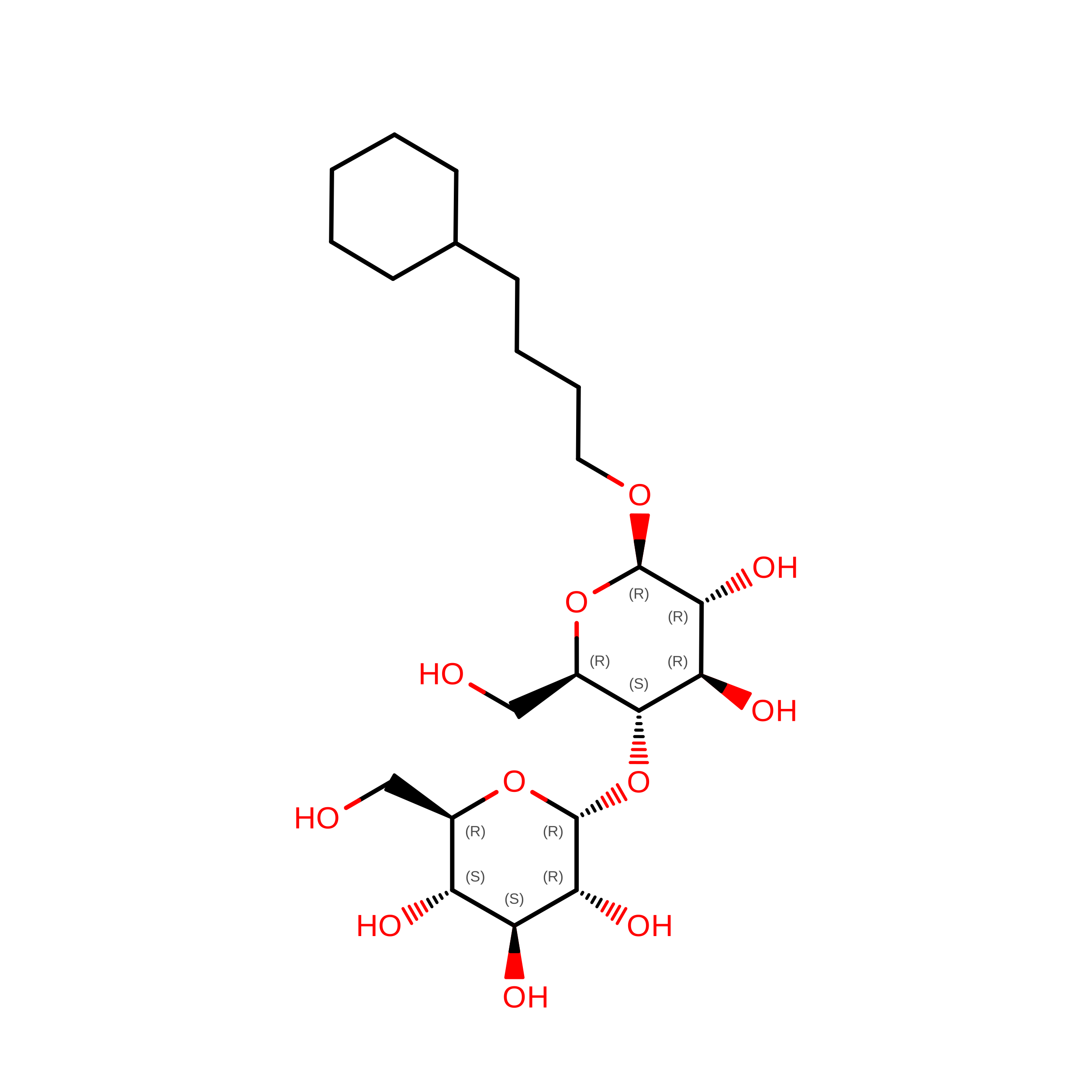
CVM

Query on CVM


Download:Ideal Coordinates CCD File
AA [auth C]
AB [auth E]
BA [auth C]
BB [auth E]
CA [auth C]
AA [auth C],
AB [auth E],
BA [auth C],
BB [auth E],
CA [auth C],
CB [auth E],
DA [auth C],
EA [auth C],
FA [auth C],
G [auth A],
GA [auth C],
H [auth A],
HA [auth C],
I [auth A],
IA [auth C],
J [auth A],
JA [auth C],
K [auth A],
KA [auth C],
L [auth A],
LA [auth C],
M [auth A],
MA [auth C],
N [auth A],
O [auth A],
OA [auth D],
P [auth A],
PA [auth D],
Q [auth A],
QA [auth D],
RA [auth D],
S [auth B],
T [auth B],
TA [auth E],
U [auth B],
UA [auth E],
V [auth B],
VA [auth E],
W [auth B],
WA [auth E],
X [auth B],
XA [auth E],
Y [auth B],
YA [auth E],
ZA [auth E]
CYMAL-4
C22 H40 O11
JRNQXDHDSXBSFV-WXFJLFHKSA-N
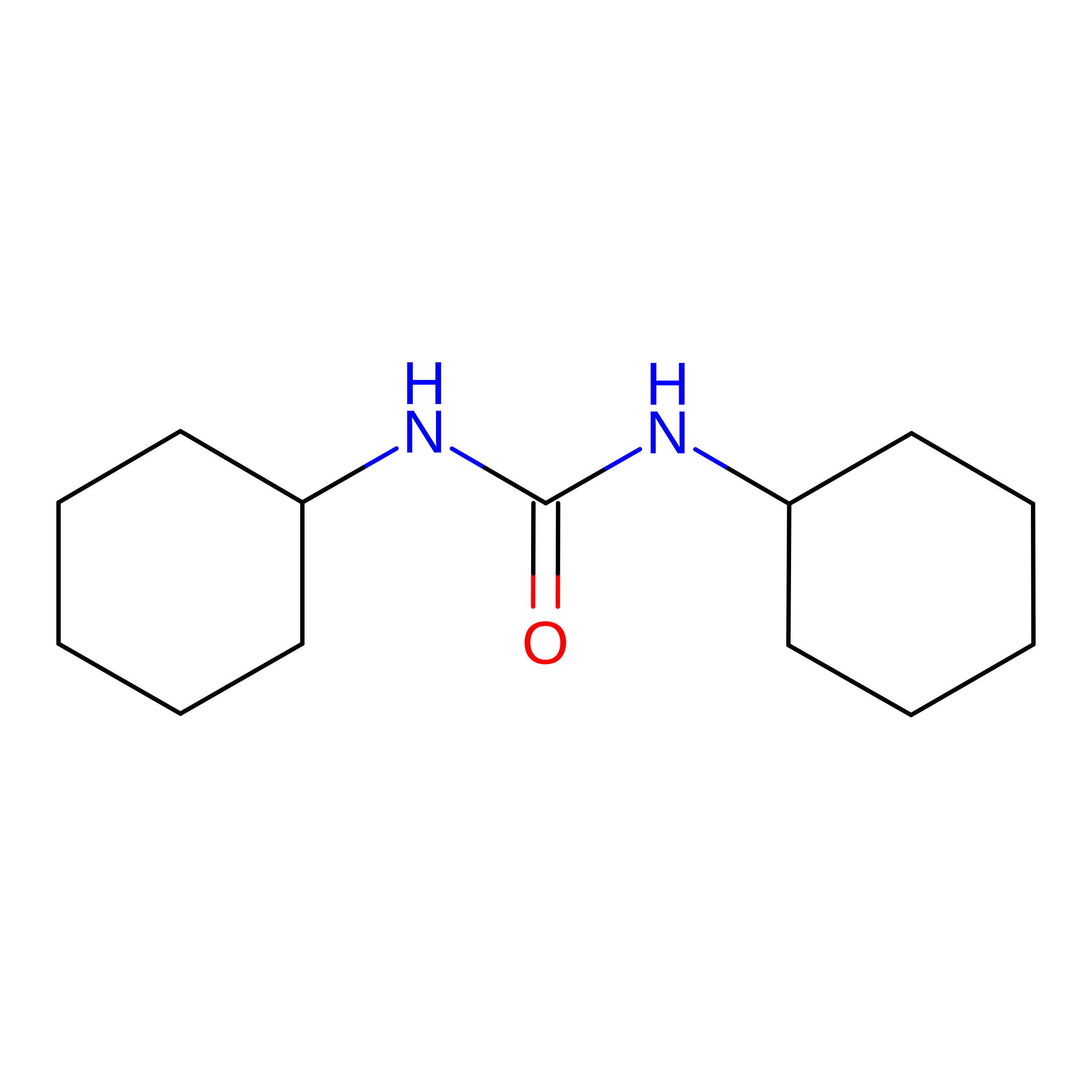
DCW

Query on DCW


Download:Ideal Coordinates CCD File
F [auth A],
NA [auth D],
R [auth B],
SA [auth E],
Z [auth C]
DICYCLOHEXYLUREA
C13 H24 N2 O
ADFXKUOMJKEIND-UHFFFAOYSA-N
Modified Residues  1 Unique
IDChains TypeFormula2D DiagramParent
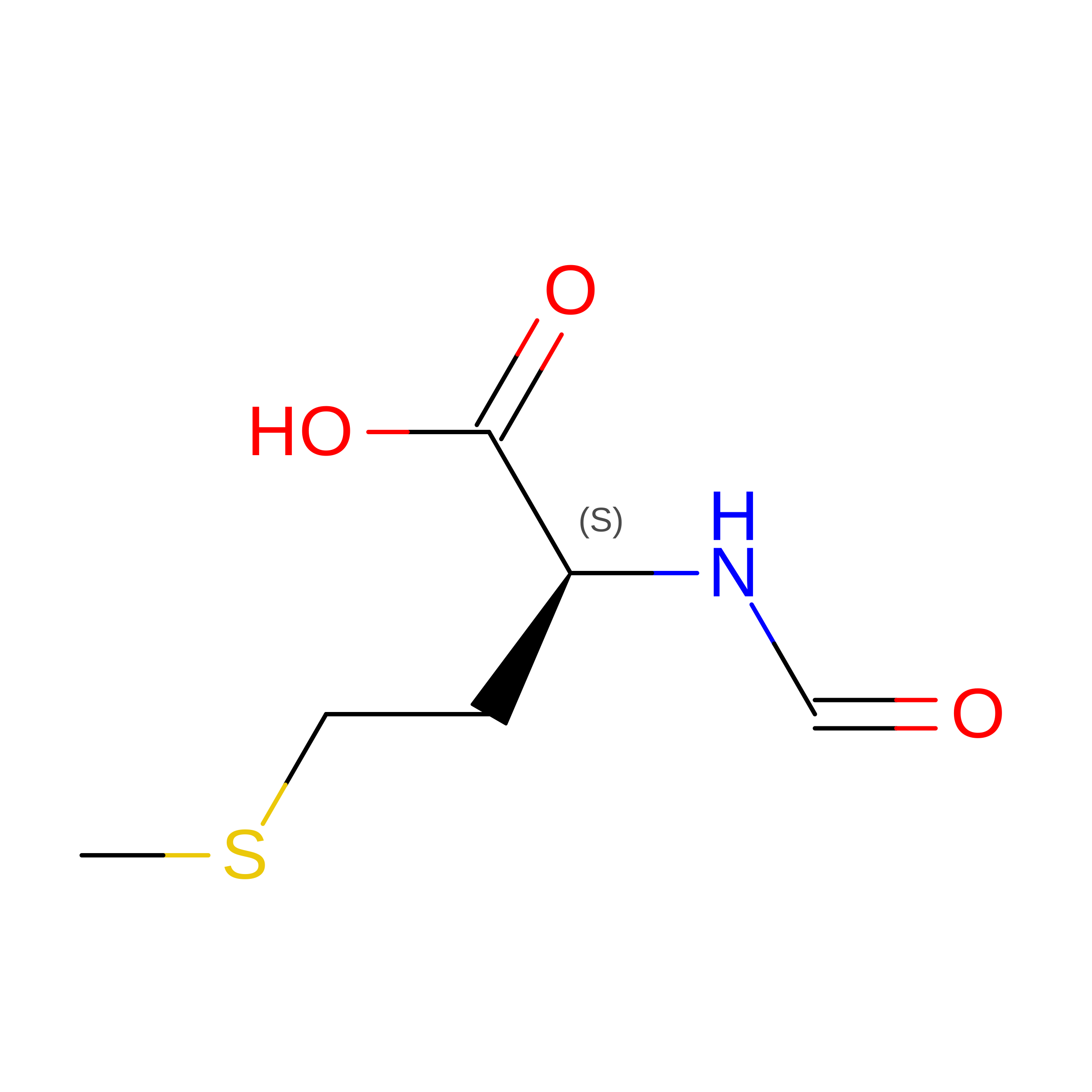
FME
Query on FME
A, B, C, D, E
L-PEPTIDE LINKINGC6 H11 N O3 SMET

Experimental Data & Validation

Experimental Data

  • Method: X-RAY DIFFRACTION
  • Resolution: 2.20 Å
  • R-Value Free:  0.223 (Depositor), 0.221 (DCC) 
  • R-Value Work:  0.186 (Depositor), 0.190 (DCC) 
  • R-Value Observed: 0.188 (Depositor) 
Space Group: P 63 2 2
Unit Cell:
Length ( Å )Angle ( ˚ )
a = 91.47α = 90
b = 91.47β = 90
c = 258.12γ = 120
Software Package:
Software NamePurpose
PHENIXrefinement
XDSdata reduction
XSCALEdata scaling
PHASERphasing

Structure Validation

View Full Validation Report


Ligand Structure Quality Assessment 


Entry History 

Deposition Data

Revision History  (Full details and data files)

  • Version 1.0: 2010-10-27
    Type: Initial release
  • Version 1.1: 2011-11-02
    Changes: Atomic model, Derived calculations, Non-polymer description, Other, Structure summary, Version format compliance
  • Version 1.2: 2023-12-20
    Changes: Data collection, Database references, Derived calculations, Other, Refinement description
  • Version 1.3: 2024-10-09
    Changes: Structure summary