7DRD | pdb_00007drd

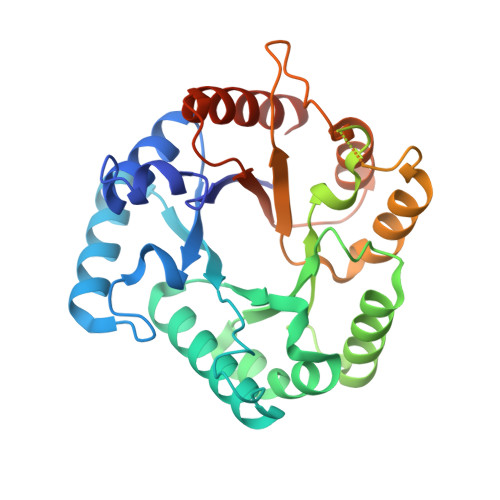
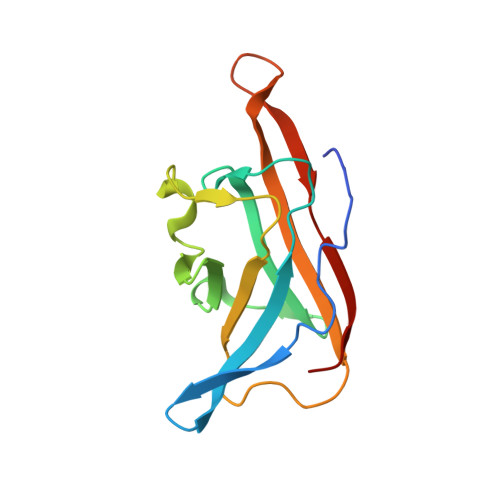
Cryo-EM structure of DgpB-C at 2.85 angstrom resolution


Experimental Data Snapshot

  • Method: ELECTRON MICROSCOPY
  • Resolution: 2.85 Å
  • Aggregation State: PARTICLE 
  • Reconstruction Method: SINGLE PARTICLE 

wwPDB Validation 3D Report Full Report

Validation slider image for 7DRD

This is version 1.1 of the entry. See complete history

Literature

C-Glycoside metabolism in the gut and in nature: Identification, characterization, structural analyses and distribution of C-C bond-cleaving enzymes.

Mori, T.Kumano, T.He, H.Watanabe, S.Senda, M.Moriya, T.Adachi, N.Hori, S.Terashita, Y.Kawasaki, M.Hashimoto, Y.Awakawa, T.Senda, T.Abe, I.Kobayashi, M.

(2021) Nat Commun 12: 6294-6294

  • DOI: https://doi.org/10.1038/s41467-021-26585-1
  • Primary Citation Related Structures: 
    7BVR, 7BVS, 7DRD, 7DRE, 7EXB, 7EXZ

  • PubMed Abstract: 

    C-Glycosides, in which a sugar moiety is linked via a carbon-carbon (C-C) bond to a non-sugar moiety (aglycone), are found in our food and medicine. The C-C bond is cleaved by intestinal microbes and the resulting aglycones exert various bioactivities. Although the enzymes responsible for the reactions have been identified, their catalytic mechanisms and the generality of the reactions in nature remain to be explored. Here, we present the identification and structural basis for the activation of xenobiotic C-glycosides by heterocomplex C-deglycosylation enzymes from intestinal and soil bacteria. They are found to be metal-dependent enzymes exhibiting broad substrate specificity toward C-glycosides. X-ray crystallographic and cryo-electron microscopic analyses, as well as structure-based mutagenesis, reveal the structural details of these enzymes and the detailed catalytic mechanisms of their remarkable C-C bond cleavage reactions. Furthermore, bioinformatic and biochemical analyses suggest that the C-deglycosylation enzymes are widely distributed in the gut, soil, and marine bacteria.


  • Organizational Affiliation
    • Graduate School of Pharmaceutical Sciences, The University of Tokyo, 7-3-1 Hongo, Bunkyo-ku, Tokyo, 113-0033, Japan.

Macromolecule Content 

  • Total Structure Weight: 218.08 kDa 
  • Atom Count: 12,708 
  • Modeled Residue Count: 1,604 
  • Deposited Residue Count: 1,916 
  • Unique protein chains: 2

Macromolecules

Find similar proteins by:|  3D Structure
Entity ID: 1
MoleculeChains  Sequence LengthOrganismDetailsImage
AP_endonuc_2 domain-containing protein
A, C, E, G
337human intestinal bacterium PUEMutation(s): 0 
Gene Names: dgpC
UniProt
Find proteins for A0A3Q9WXL1 (human intestinal bacterium PUE)
Explore A0A3Q9WXL1 
Go to UniProtKB:  A0A3Q9WXL1
Entity Groups
Sequence Clusters30% Identity50% Identity70% Identity90% Identity95% Identity100% Identity
UniProt GroupA0A3Q9WXL1
Sequence Annotations
Expand
Reference Sequence
Find similar proteins by:|  3D Structure
Entity ID: 2
MoleculeChains  Sequence LengthOrganismDetailsImage
DgpB
B, D, F, H
142human intestinal bacterium PUEMutation(s): 0 
Gene Names: dgpB
UniProt
Find proteins for A0A3Q9WUX0 (human intestinal bacterium PUE)
Explore A0A3Q9WUX0 
Go to UniProtKB:  A0A3Q9WUX0
Entity Groups
Sequence Clusters30% Identity50% Identity70% Identity90% Identity95% Identity100% Identity
UniProt GroupA0A3Q9WUX0
Sequence Annotations
Expand
Reference Sequence

Experimental Data & Validation

Experimental Data

  • Method: ELECTRON MICROSCOPY
  • Resolution: 2.85 Å
  • Aggregation State: PARTICLE 
  • Reconstruction Method: SINGLE PARTICLE 
EM Software:
TaskSoftware PackageVersion
RECONSTRUCTIONRELION3.1
MODEL REFINEMENTPHENIX1.18.2-3874

Structure Validation

View Full Validation Report


Entry History 

& Funding Information

Deposition Data


Funding OrganizationLocationGrant Number
Japan Agency for Medical Research and Development (AMED)JapanJP20am0101071

Revision History  (Full details and data files)

  • Version 1.0: 2021-12-08
    Type: Initial release
  • Version 1.1: 2024-06-05
    Changes: Data collection