7KZG | pdb_00007kzg

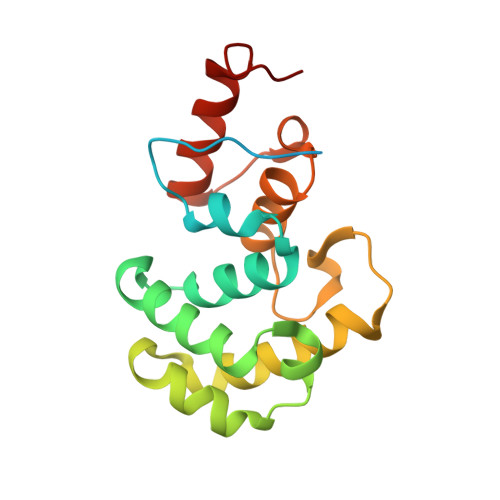
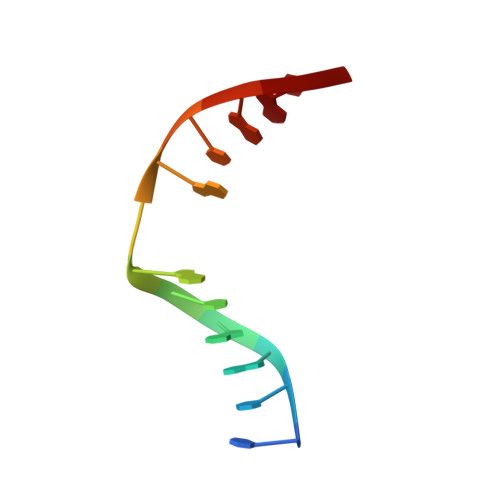
Human MBD4 glycosylase domain bound to DNA containing oxacarbenium-ion analog 1-aza-2'-deoxyribose


Experimental Data Snapshot

  • Method: X-RAY DIFFRACTION
  • Resolution: 1.68 Å
  • R-Value Free: 
    0.205 (Depositor), 0.205 (DCC) 
  • R-Value Work: 
    0.168 (Depositor), 0.169 (DCC) 
  • R-Value Observed: 
    0.170 (Depositor) 

Starting Model: experimental
View more details

wwPDB Validation 3D Report Full Report

Validation slider image for 7KZG

This is version 1.1 of the entry. See complete history

Literature

Structural Insights into the Mechanism of Base Excision by MBD4.

Pidugu, L.S.Bright, H.Lin, W.J.Majumdar, C.Van Ostrand, R.P.David, S.S.Pozharski, E.Drohat, A.C.

(2021) J Mol Biology 433: 167097-167097

  • DOI: https://doi.org/10.1016/j.jmb.2021.167097
  • Primary Citation Related Structures: 
    7KZ0, 7KZ1, 7KZG

  • PubMed Abstract: 

    DNA glycosylases remove damaged or modified nucleobases by cleaving the N-glycosyl bond and the correct nucleotide is restored through subsequent base excision repair. In addition to excising threatening lesions, DNA glycosylases contribute to epigenetic regulation by mediating DNA demethylation and perform other important functions. However, the catalytic mechanism remains poorly defined for many glycosylases, including MBD4 (methyl-CpG binding domain IV), a member of the helix-hairpin-helix (HhH) superfamily. MBD4 excises thymine from G·T mispairs, suppressing mutations caused by deamination of 5-methylcytosine, and it removes uracil and modified uracils (e.g., 5-hydroxymethyluracil) mispaired with guanine. To investigate the mechanism of MBD4 we solved high-resolution structures of enzyme-DNA complexes at three stages of catalysis. Using a non-cleavable substrate analog, 2'-deoxy-pseudouridine, we determined the first structure of an enzyme-substrate complex for wild-type MBD4, which confirms interactions that mediate lesion recognition and suggests that a catalytic Asp, highly conserved in HhH enzymes, binds the putative nucleophilic water molecule and stabilizes the transition state. Observation that mutating the Asp (to Gly) reduces activity by 2700-fold indicates an important role in catalysis, but probably not one as the nucleophile in a double-displacement reaction, as previously suggested. Consistent with direct-displacement hydrolysis, a structure of the enzyme-product complex indicates a reaction leading to inversion of configuration. A structure with DNA containing 1-azadeoxyribose models a potential oxacarbenium-ion intermediate and suggests the Asp could facilitate migration of the electrophile towards the nucleophilic water. Finally, the structures provide detailed snapshots of the HhH motif, informing how these ubiquitous metal-binding elements mediate DNA binding.


  • Organizational Affiliation
    • Department of Biochemistry and Molecular Biology, University of Maryland School of Medicine, Baltimore, MD 21201, USA.

Macromolecule Content 

  • Total Structure Weight: 28.38 kDa 
  • Atom Count: 1,993 
  • Modeled Residue Count: 168 
  • Deposited Residue Count: 198 
  • Unique protein chains: 1
  • Unique nucleic acid chains: 2

Macromolecules


Find similar proteins by:|  3D Structure
Entity ID: 1
MoleculeChains  Sequence LengthOrganismDetailsImage
Methyl-CpG-binding domain protein 4174Homo sapiensMutation(s): 0 
Gene Names: MBD4MED1
EC: 3.2.2
UniProt & NIH Common Fund Data Resources
Find proteins for O95243 (Homo sapiens)
Explore O95243 
Go to UniProtKB:  O95243
PHAROS:  O95243
GTEx:  ENSG00000129071 
Entity Groups
Sequence Clusters30% Identity50% Identity70% Identity90% Identity95% Identity100% Identity
UniProt GroupO95243
Sequence Annotations
Expand
Reference Sequence
Find similar nucleic acids by:  Sequence
Entity ID: 2
MoleculeChains LengthOrganismImage
DNA (5'-D(*CP*CP*AP*GP*CP*GP*(NR1)P*GP*CP*AP*GP*C)-3')B [auth C]12Homo sapiens
Sequence Annotations
Expand
Reference Sequence
Find similar nucleic acids by:  Sequence
Entity ID: 3
MoleculeChains LengthOrganismImage
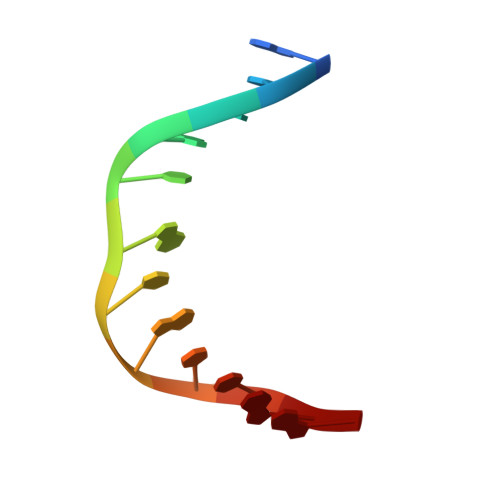
DNA (5'-D(*GP*CP*TP*GP*CP*GP*CP*GP*CP*TP*GP*G)-3')C [auth D]12Homo sapiens
Sequence Annotations
Expand
Reference Sequence

Small Molecules

Ligands 5 Unique
IDChains Name / Formula / InChI Key2D Diagram3D Interactions
PEG

Query on PEG


Download:Ideal Coordinates CCD File
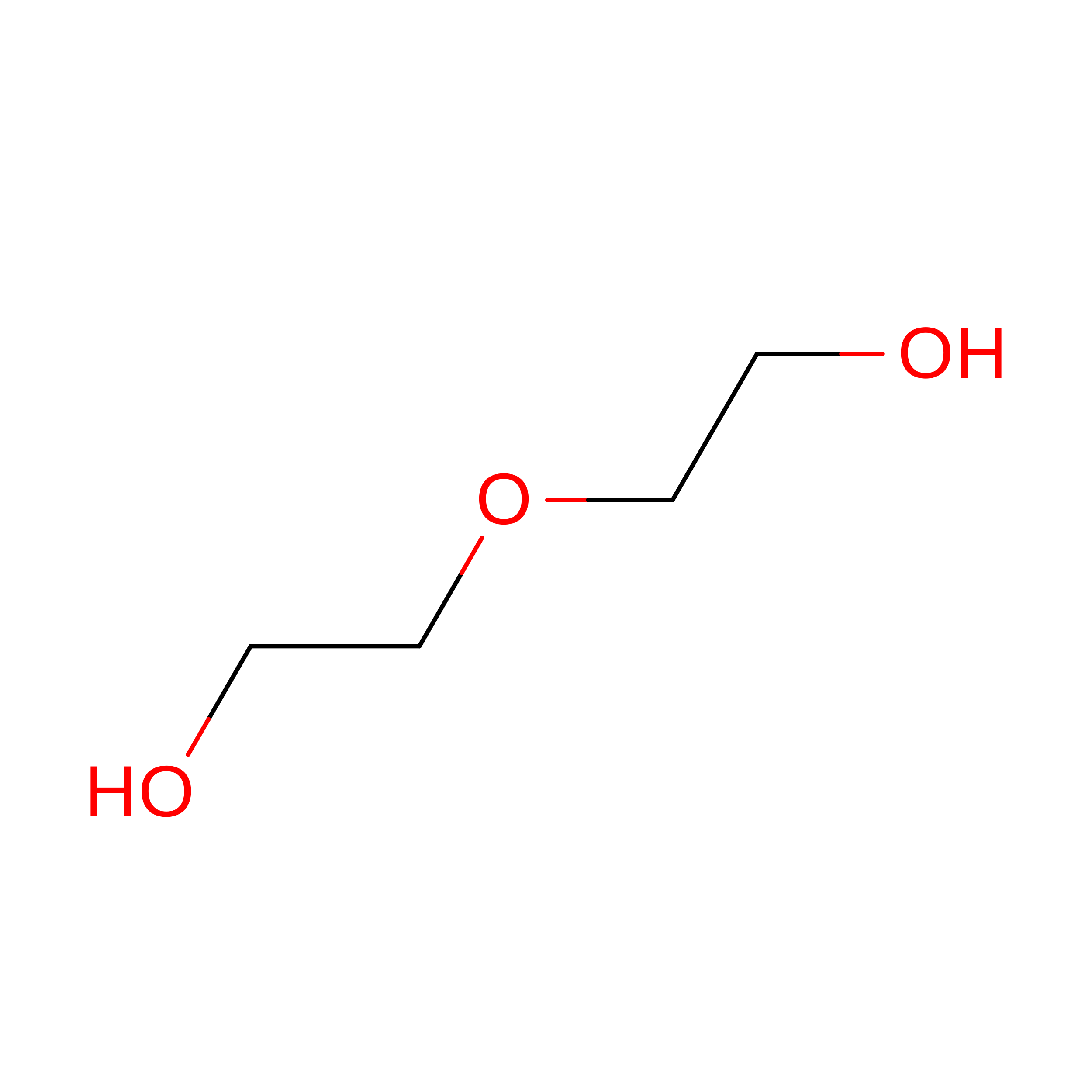
E [auth A]DI(HYDROXYETHYL)ETHER
C4 H10 O3
MTHSVFCYNBDYFN-UHFFFAOYSA-N
GOL

Query on GOL


Download:Ideal Coordinates CCD File
D [auth A],
G [auth A],
J [auth C],
K [auth D]
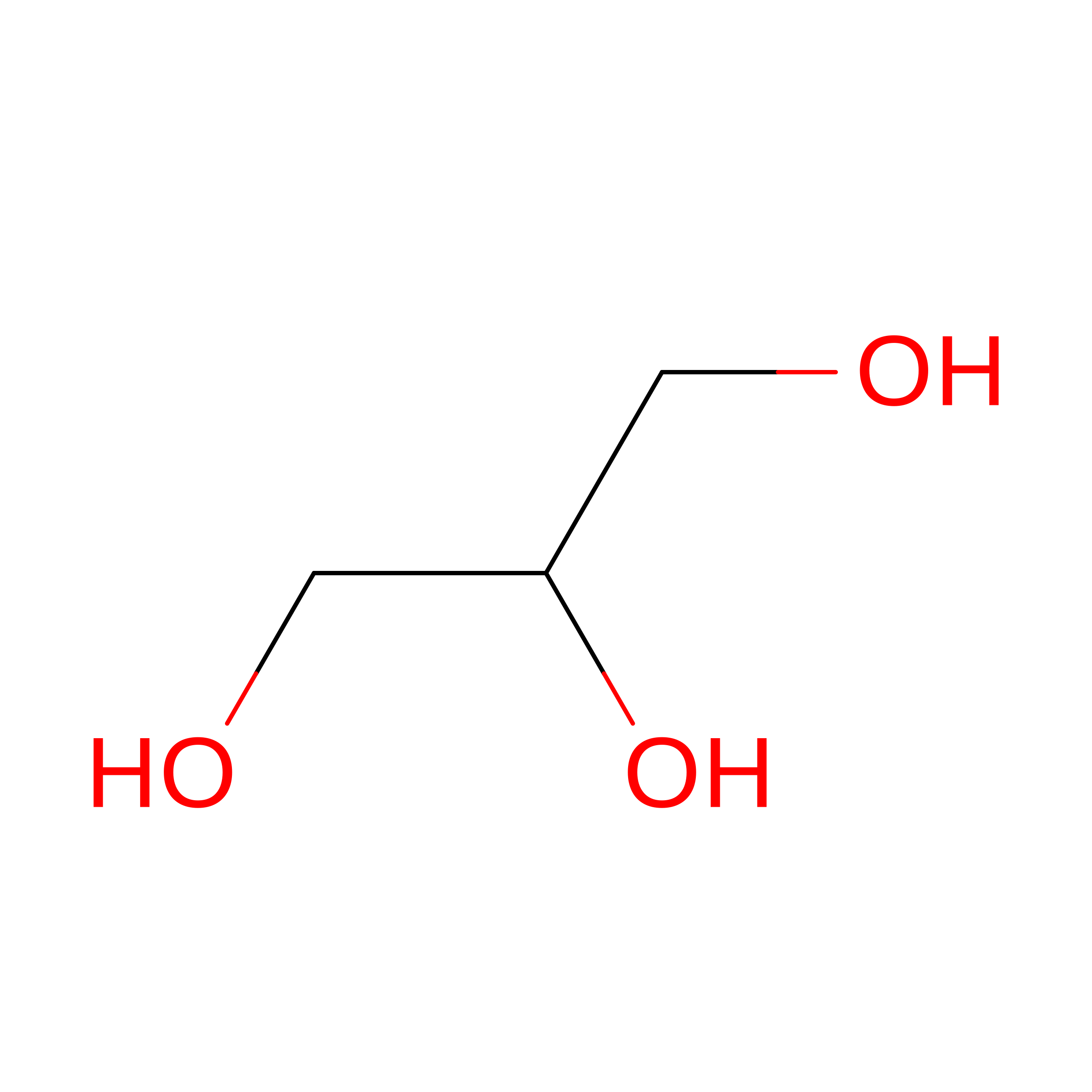
GLYCEROL
C3 H8 O3
PEDCQBHIVMGVHV-UHFFFAOYSA-N
EDO

Query on EDO


Download:Ideal Coordinates CCD File
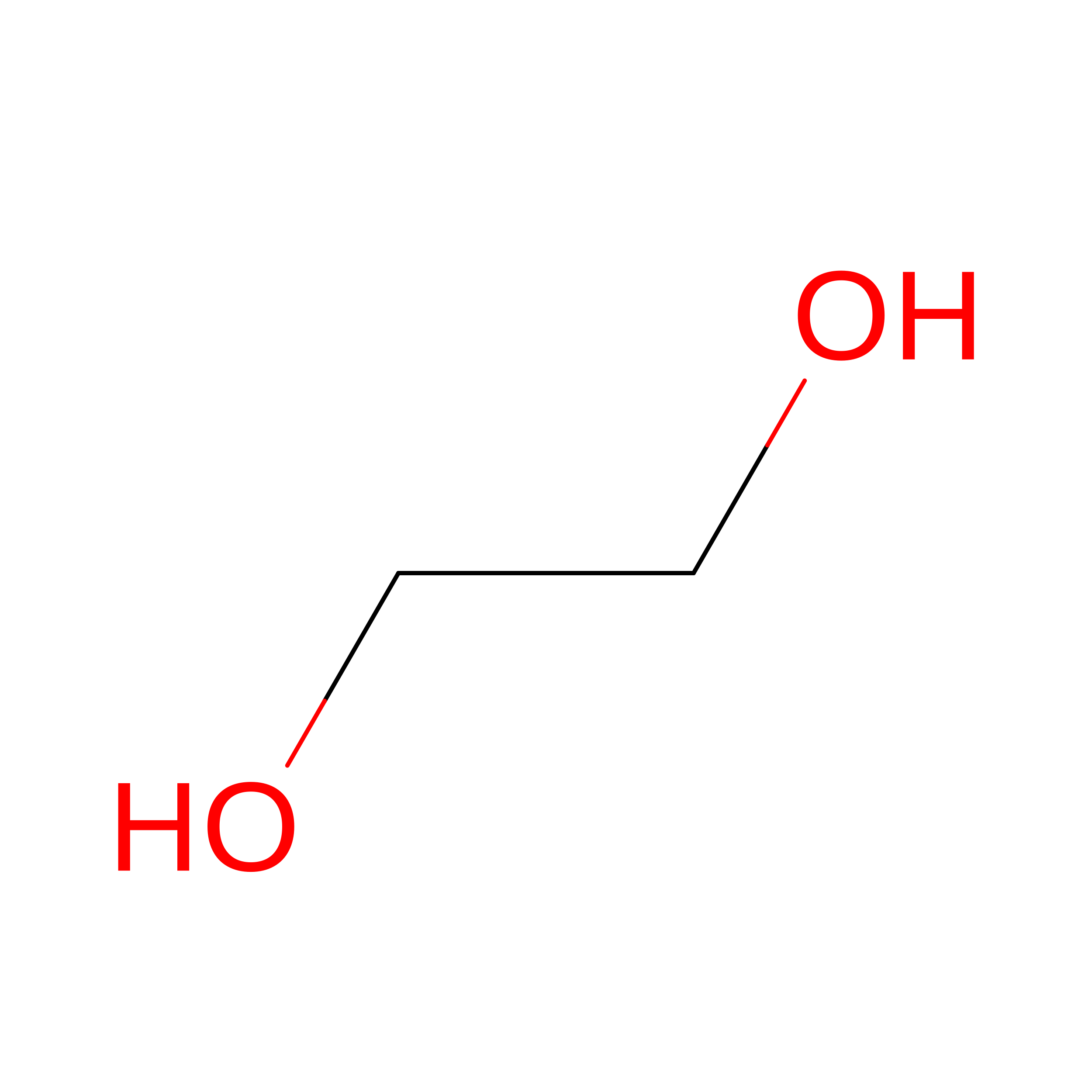
F [auth A]1,2-ETHANEDIOL
C2 H6 O2
LYCAIKOWRPUZTN-UHFFFAOYSA-N
CL

Query on CL


Download:Ideal Coordinates CCD File
I [auth A]CHLORIDE ION
Cl
VEXZGXHMUGYJMC-UHFFFAOYSA-M
NA

Query on NA


Download:Ideal Coordinates CCD File
H [auth A]SODIUM ION
Na
FKNQFGJONOIPTF-UHFFFAOYSA-N

Experimental Data & Validation

Experimental Data

  • Method: X-RAY DIFFRACTION
  • Resolution: 1.68 Å
  • R-Value Free:  0.205 (Depositor), 0.205 (DCC) 
  • R-Value Work:  0.168 (Depositor), 0.169 (DCC) 
  • R-Value Observed: 0.170 (Depositor) 
Space Group: P 21 21 21
Unit Cell:
Length ( Å )Angle ( ˚ )
a = 41.465α = 90
b = 56.414β = 90
c = 102.733γ = 90
Software Package:
Software NamePurpose
PHENIXrefinement
XDSdata reduction
Aimlessdata scaling
PHASERphasing
PDB_EXTRACTdata extraction

Structure Validation

View Full Validation Report


Entry History 

& Funding Information

Deposition Data


Funding OrganizationLocationGrant Number
National Institutes of Health/National Institute of General Medical Sciences (NIH/NIGMS)United StatesR01-GM072711, R35-GM136225

Revision History  (Full details and data files)

  • Version 1.0: 2021-11-10
    Type: Initial release
  • Version 1.1: 2023-10-18
    Changes: Data collection, Refinement description