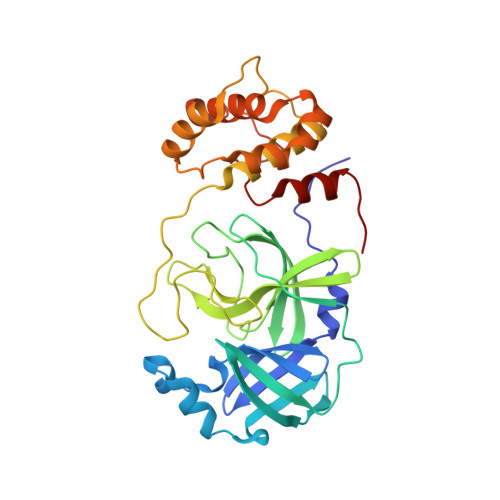
7NTV | pdb_00007ntv

Crystal structure of SARS CoV2 main protease in complex with DN_EG_002 (modelled using PanDDA event map)


Experimental Data Snapshot

  • Method: X-RAY DIFFRACTION
  • Resolution: 2.06 Å
  • R-Value Free: 
    0.228 (Depositor), 0.229 (DCC) 
  • R-Value Work: 
    0.195 (Depositor), 0.195 (DCC) 

Starting Model: experimental
View more details

wwPDB Validation 3D Report Full Report

Validation slider image for 7NTV

Ligand Structure Quality Assessment 


This is version 1.4 of the entry. See complete history

Literature

Combining High-Throughput Synthesis and High-Throughput Protein Crystallography for Accelerated Hit Identification.

Sutanto, F.Shaabani, S.Oerlemans, R.Eris, D.Patil, P.Hadian, M.Wang, M.Sharpe, M.E.Groves, M.R.Domling, A.

(2021) Angew Chem Int Ed Engl 60: 18231-18239

  • DOI: https://doi.org/10.1002/anie.202105584
  • Primary Citation Related Structures: 
    7NT1, 7NT2, 7NT3, 7NTV, 7NUK

  • PubMed Abstract: 

    Protein crystallography (PX) is widely used to drive advanced stages of drug optimization or to discover medicinal chemistry starting points by fragment soaking. However, recent progress in PX could allow for a more integrated role into early drug discovery. Here, we demonstrate for the first time the interplay of high throughput synthesis and high throughput PX. We describe a practical multicomponent reaction approach to acrylamides and -esters from diverse building blocks suitable for mmol scale synthesis on 96-well format and on a high-throughput nanoscale format in a highly automated fashion. High-throughput PX of our libraries efficiently yielded potent covalent inhibitors of the main protease of the COVID-19 causing agent, SARS-CoV-2. Our results demonstrate, that the marriage of in situ HT synthesis of (covalent) libraires and HT PX has the potential to accelerate hit finding and to provide meaningful strategies for medicinal chemistry projects.


  • Organizational Affiliation
    • University of Groningen, Department of Drug Design, A. Deusinglaan 1, 9713, AV, Groningen, The Netherlands.

Macromolecule Content 

  • Total Structure Weight: 68.5 kDa 
  • Atom Count: 4,943 
  • Modeled Residue Count: 606 
  • Deposited Residue Count: 612 
  • Unique protein chains: 1

Macromolecules

Find similar proteins by:|  3D Structure
Entity ID: 1
MoleculeChains  Sequence LengthOrganismDetailsImage
3C-like proteinase
A, B
306Severe acute respiratory syndrome coronavirus 2Mutation(s): 0 
EC: 3.4.22.69
UniProt
Find proteins for P0DTD1 (Severe acute respiratory syndrome coronavirus 2)
Explore P0DTD1 
Go to UniProtKB:  P0DTD1
Entity Groups
Sequence Clusters30% Identity50% Identity70% Identity90% Identity95% Identity100% Identity
UniProt GroupP0DTD1
Sequence Annotations
Expand
Reference Sequence

Small Molecules

Ligands 2 Unique
IDChains Name / Formula / InChI Key2D Diagram3D Interactions
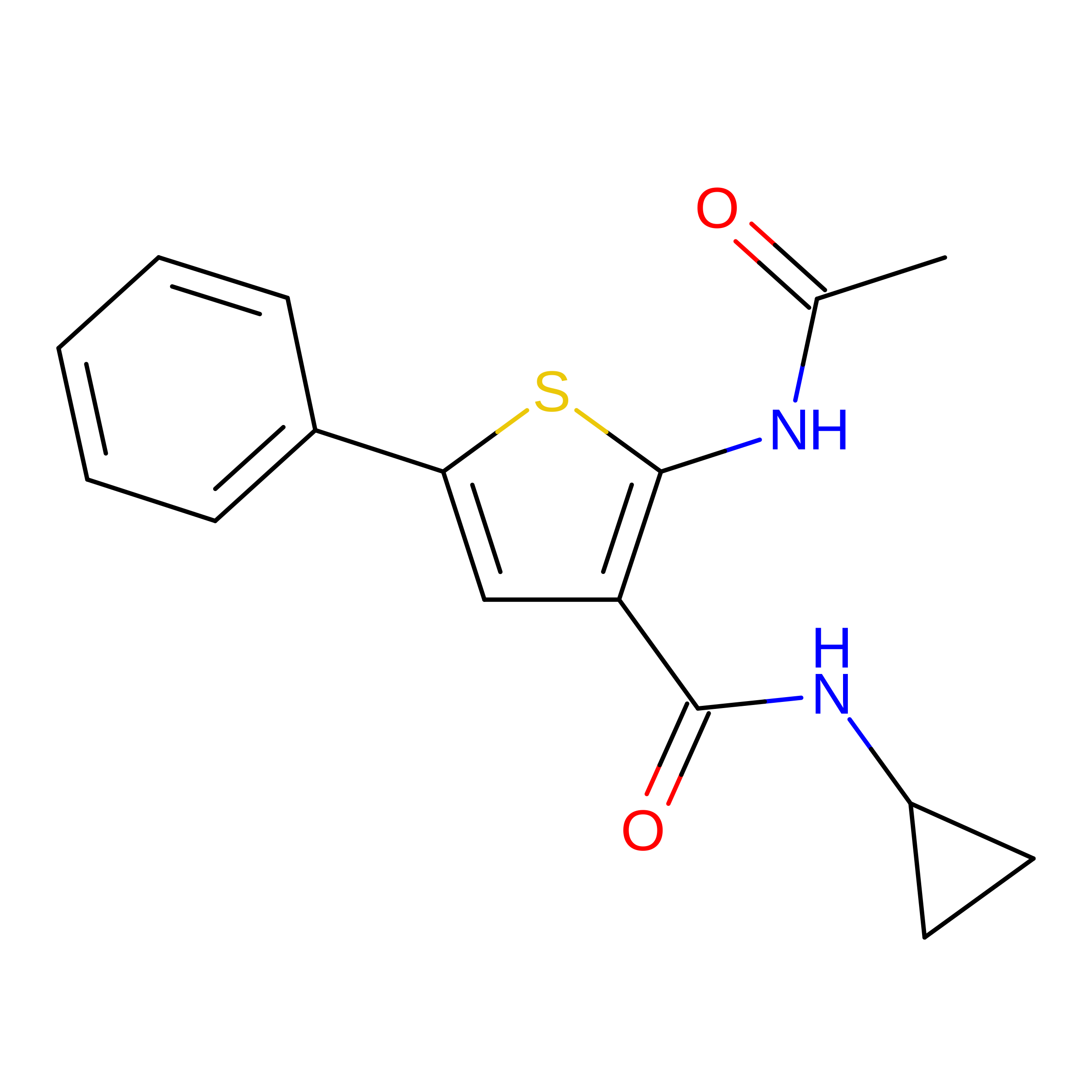
US8
(Subject of Investigation/LOI)

Query on US8


Download:Ideal Coordinates CCD File
J [auth B]2-acetamido-N-cyclopropyl-5-phenyl-thiophene-3-carboxamide
C16 H16 N2 O2 S
XGQYGJKFUOSIIU-UHFFFAOYSA-N
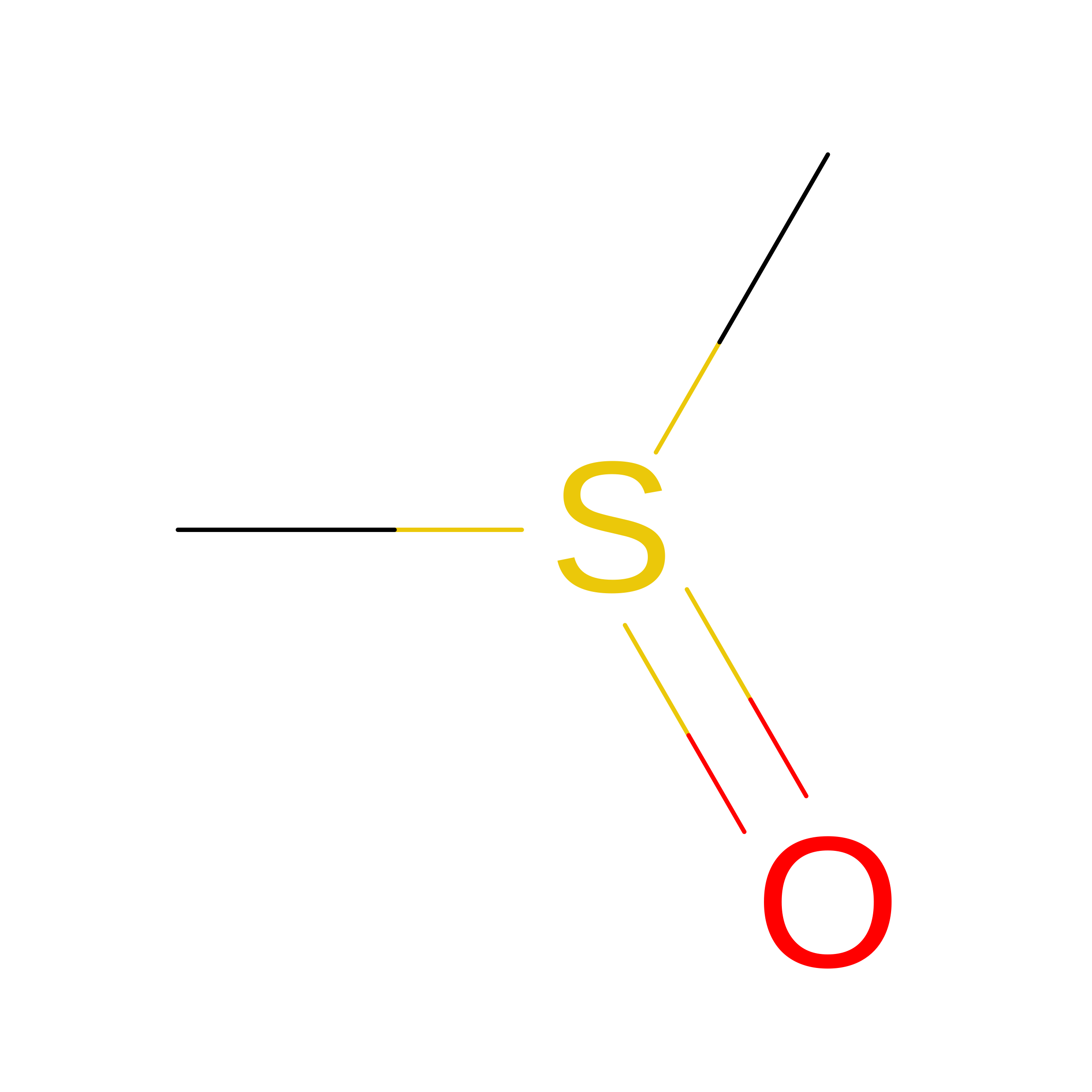
DMS

Query on DMS


Download:Ideal Coordinates CCD File
C [auth A]
D [auth A]
E [auth B]
F [auth B]
G [auth B]
C [auth A],
D [auth A],
E [auth B],
F [auth B],
G [auth B],
H [auth B],
I [auth B]
DIMETHYL SULFOXIDE
C2 H6 O S
IAZDPXIOMUYVGZ-UHFFFAOYSA-N

Experimental Data & Validation

Experimental Data

  • Method: X-RAY DIFFRACTION
  • Resolution: 2.06 Å
  • R-Value Free:  0.228 (Depositor), 0.229 (DCC) 
  • R-Value Work:  0.195 (Depositor), 0.195 (DCC) 
Space Group: P 21 21 21
Unit Cell:
Length ( Å )Angle ( ˚ )
a = 67.941α = 90
b = 99.743β = 90
c = 104.126γ = 90
Software Package:
Software NamePurpose
REFMACrefinement
XDSdata processing
Cootmodel building
PHASERphasing
pointlessdata scaling
XDSdata reduction

Structure Validation

View Full Validation Report


Ligand Structure Quality Assessment 


Entry History 

Deposition Data

Revision History  (Full details and data files)

  • Version 1.0: 2021-06-16
    Type: Initial release
  • Version 1.1: 2021-07-21
    Changes: Database references
  • Version 1.2: 2021-08-11
    Changes: Database references
  • Version 1.3: 2024-01-31
    Changes: Data collection, Derived calculations, Refinement description
  • Version 1.4: 2024-10-16
    Changes: Structure summary