8DN2 | pdb_00008dn2

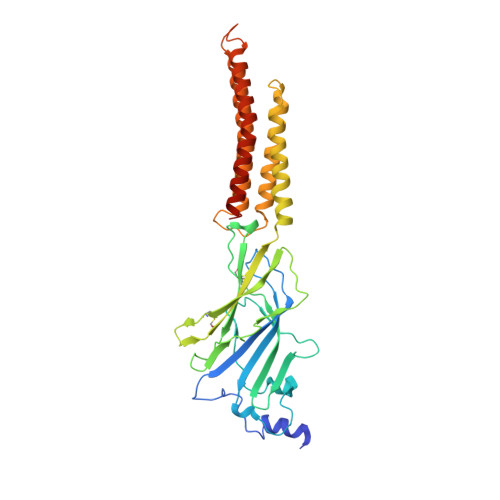
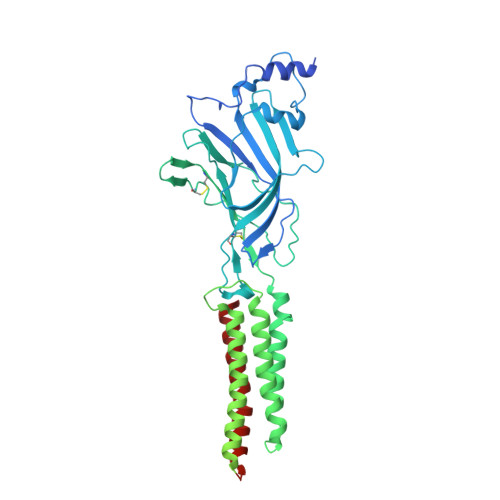
Cryo-EM structure of human Glycine Receptor alpha1-beta heteromer, glycine-bound state 2(expanded open)


Experimental Data Snapshot

  • Method: ELECTRON MICROSCOPY
  • Resolution: 3.90 Å
  • Aggregation State: PARTICLE 
  • Reconstruction Method: SINGLE PARTICLE 

Starting Model: experimental
View more details

wwPDB Validation 3D Report Full Report

Validation slider image for 8DN2

This is version 1.3 of the entry. See complete history

Literature

Asymmetric gating of a human hetero-pentameric glycine receptor.

Liu, X.Wang, W.

(2023) Nat Commun 14: 6377-6377

  • DOI: https://doi.org/10.1038/s41467-023-42051-6
  • Primary Citation Related Structures: 
    8DN2, 8DN3, 8DN4, 8DN5

  • PubMed Abstract: 

    Hetero-pentameric Cys-loop receptors constitute a major type of neurotransmitter receptors that enable signal transmission and processing in the nervous system. Despite intense investigations into their working mechanism and pharmaceutical potentials, how neurotransmitters activate these receptors remains unclear due to the lack of high-resolution structural information in the activated open state. Here we report near-atomic resolution structures resolved in digitonin consistent with all principle functional states of the human α1β GlyR, which is a major Cys-loop receptor that mediates inhibitory neurotransmission in the central nervous system of adults. Glycine binding induces cooperative and symmetric structural rearrangements in the neurotransmitter-binding extracellular domain but asymmetrical pore dilation in the transmembrane domain. Symmetric response in the extracellular domain is consistent with electrophysiological data showing cooperative glycine activation and contribution from both α1 and β subunits. A set of functionally essential but differentially charged amino acid residues in the transmembrane domain of the α1 and β subunits explains asymmetric activation. These findings provide a foundation for understanding how the gating of the Cys-loop receptor family members diverges to accommodate specific physiological environments.


  • Organizational Affiliation
    • Department of Biophysics, University of Texas Southwestern Medical Center, Dallas, TX, USA.

Macromolecule Content 

  • Total Structure Weight: 251.21 kDa 
  • Atom Count: 14,102 
  • Modeled Residue Count: 1,693 
  • Deposited Residue Count: 2,148 
  • Unique protein chains: 2

Macromolecules

Find similar proteins by:|  3D Structure
Entity ID: 1
MoleculeChains  Sequence LengthOrganismDetailsImage
Glycine receptor subunit alpha-1A [auth D],
B [auth A],
C [auth B],
D [auth C]
367Homo sapiensMutation(s): 0 
Gene Names: GLRA1
Membrane Entity: Yes 
UniProt & NIH Common Fund Data Resources
Find proteins for P23415 (Homo sapiens)
Explore P23415 
Go to UniProtKB:  P23415
PHAROS:  P23415
GTEx:  ENSG00000145888 
Entity Groups
Sequence Clusters30% Identity50% Identity70% Identity90% Identity95% Identity100% Identity
UniProt GroupP23415
Glycosylation
Glycosylation Sites: 1Go to GlyGen: P23415-1
Sequence Annotations
Expand
Reference Sequence
Find similar proteins by:|  3D Structure
Entity ID: 2
MoleculeChains  Sequence LengthOrganismDetailsImage
Glycine receptor subunit beta,Green fluorescent protein,Glycine receptor beta680Homo sapiensAequorea victoriaMutation(s): 0 
Gene Names: GLRBGFP
Membrane Entity: Yes 
UniProt & NIH Common Fund Data Resources
Find proteins for P42212 (Aequorea victoria)
Explore P42212 
Go to UniProtKB:  P42212
Find proteins for P48167 (Homo sapiens)
Explore P48167 
Go to UniProtKB:  P48167
PHAROS:  P48167
GTEx:  ENSG00000109738 
Entity Groups
Sequence Clusters30% Identity50% Identity70% Identity90% Identity95% Identity100% Identity
UniProt GroupsP42212P48167
Glycosylation
Glycosylation Sites: 1Go to GlyGen: P48167-1
Sequence Annotations
Expand
Reference Sequence

Small Molecules

Ligands 9 Unique
IDChains Name / Formula / InChI Key2D Diagram3D Interactions
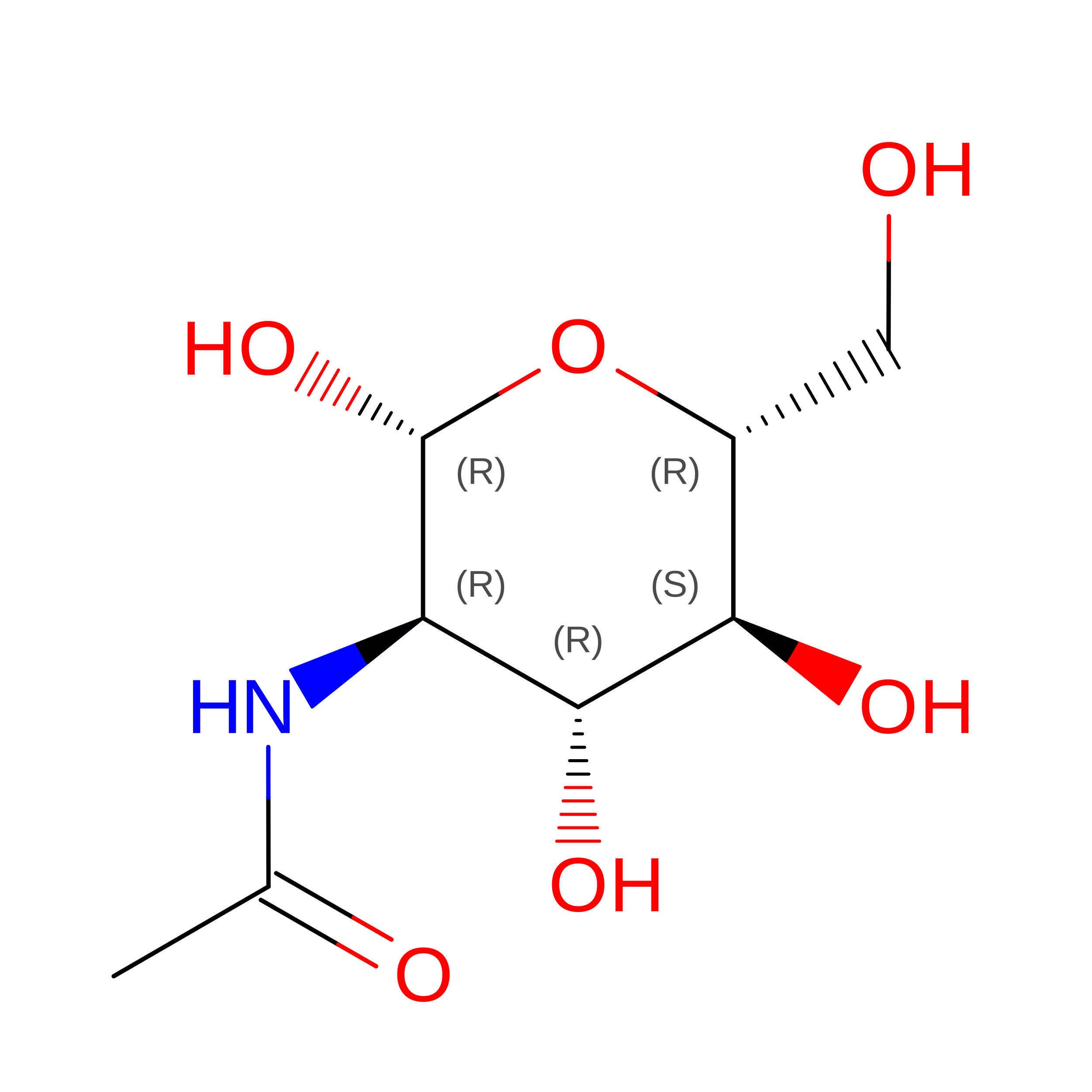
NAG
(Subject of Investigation/LOI)

Query on NAG


Download:Ideal Coordinates CCD File
BA [auth B],
F [auth D],
GA [auth C],
OA [auth E],
Q [auth A]
2-acetamido-2-deoxy-beta-D-glucopyranose
C8 H15 N O6
OVRNDRQMDRJTHS-FMDGEEDCSA-N
UND

Query on UND


Download:Ideal Coordinates CCD File
CA [auth B],
L [auth D],
S [auth A]
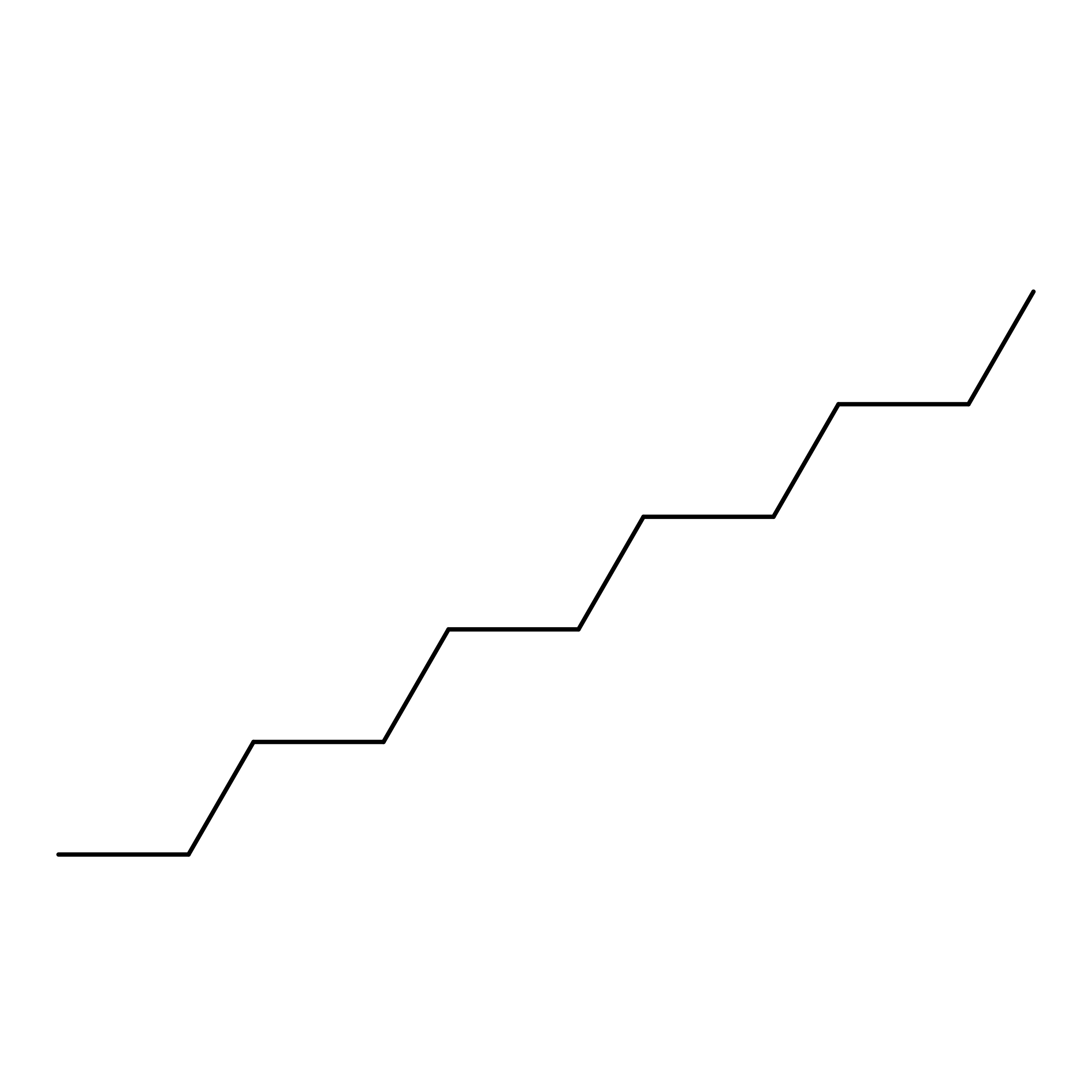
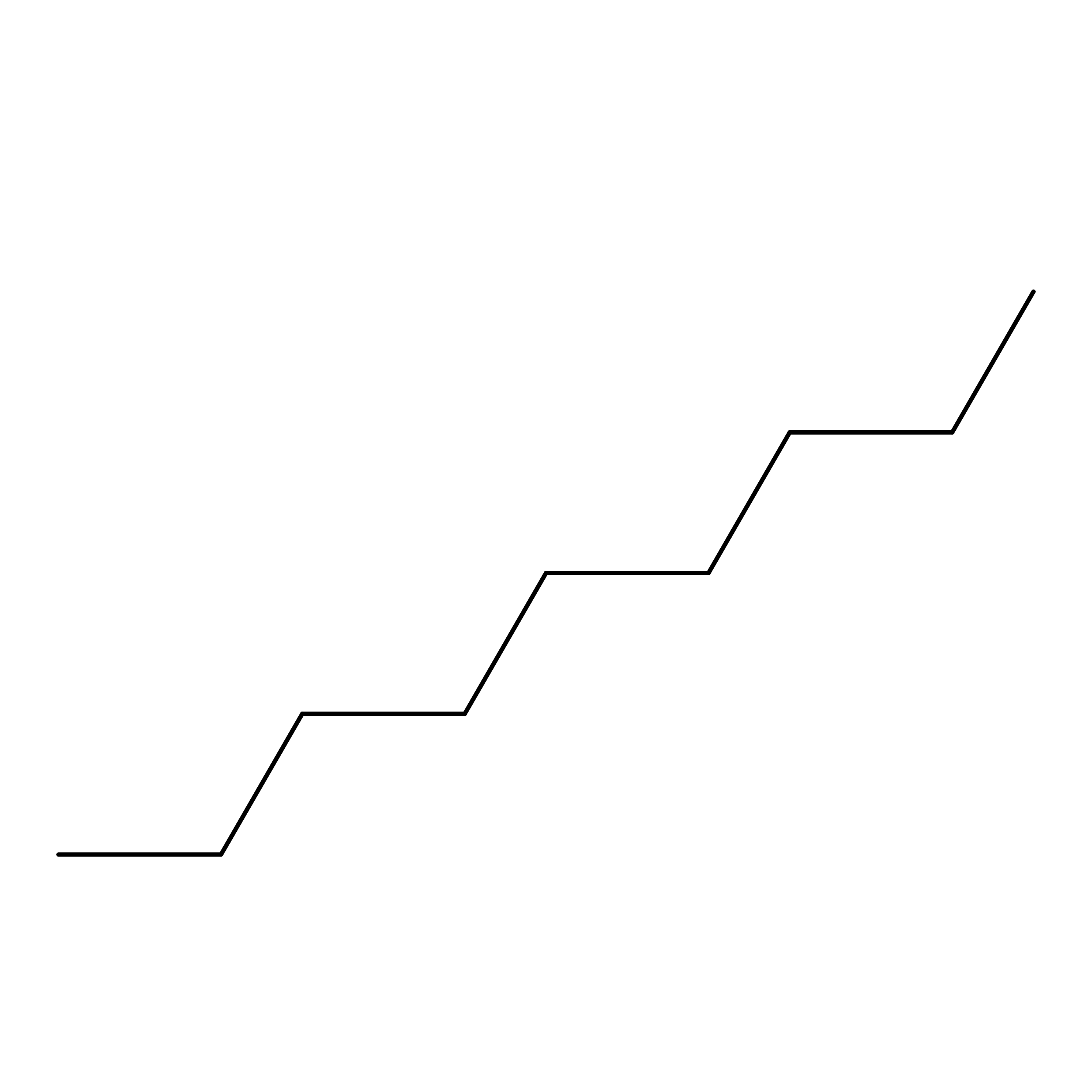
UNDECANE
C11 H24
RSJKGSCJYJTIGS-UHFFFAOYSA-N
D10

Query on D10


Download:Ideal Coordinates CCD File
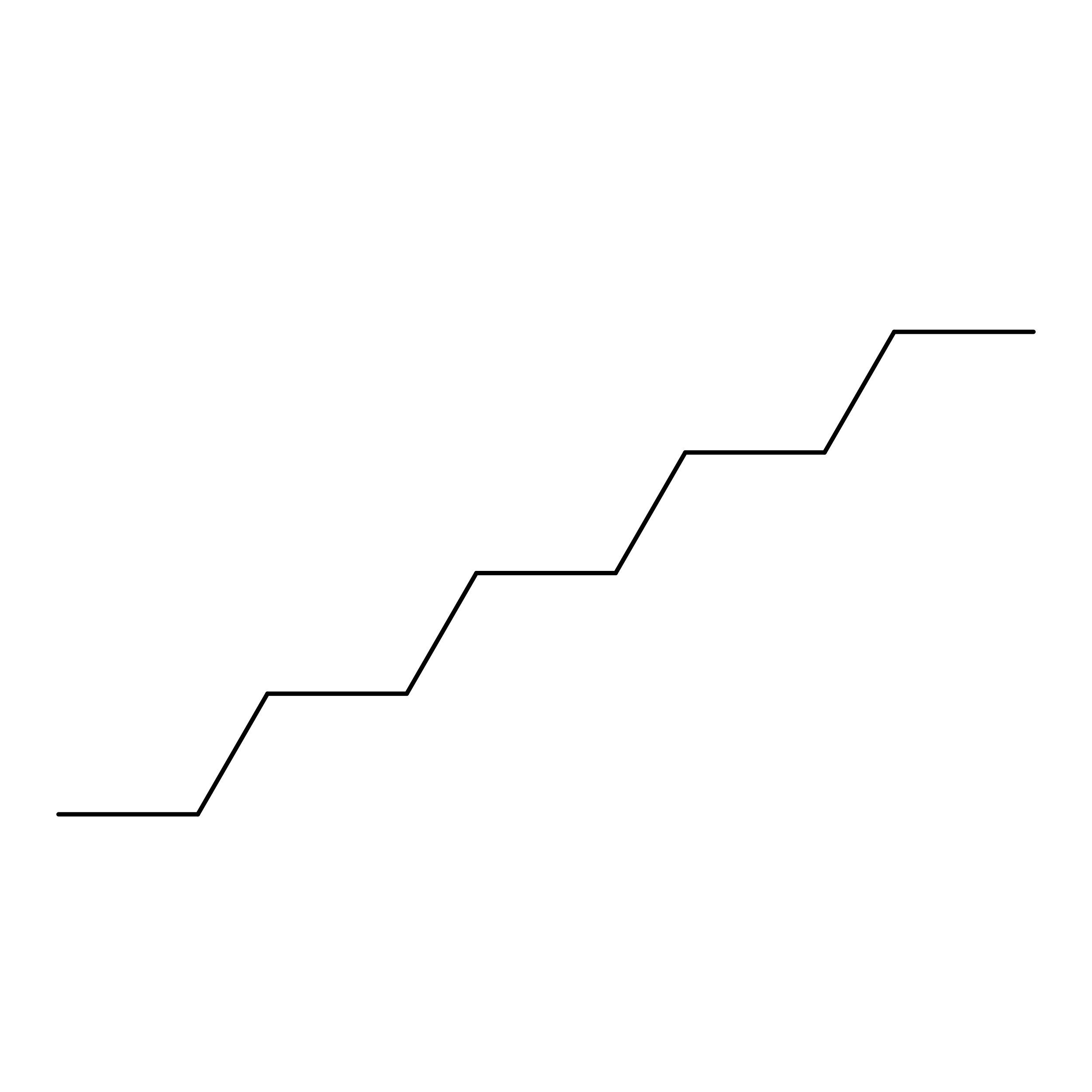
PA [auth E]DECANE
C10 H22
DIOQZVSQGTUSAI-UHFFFAOYSA-N
DD9

Query on DD9


Download:Ideal Coordinates CCD File
RA [auth E],
T [auth A]
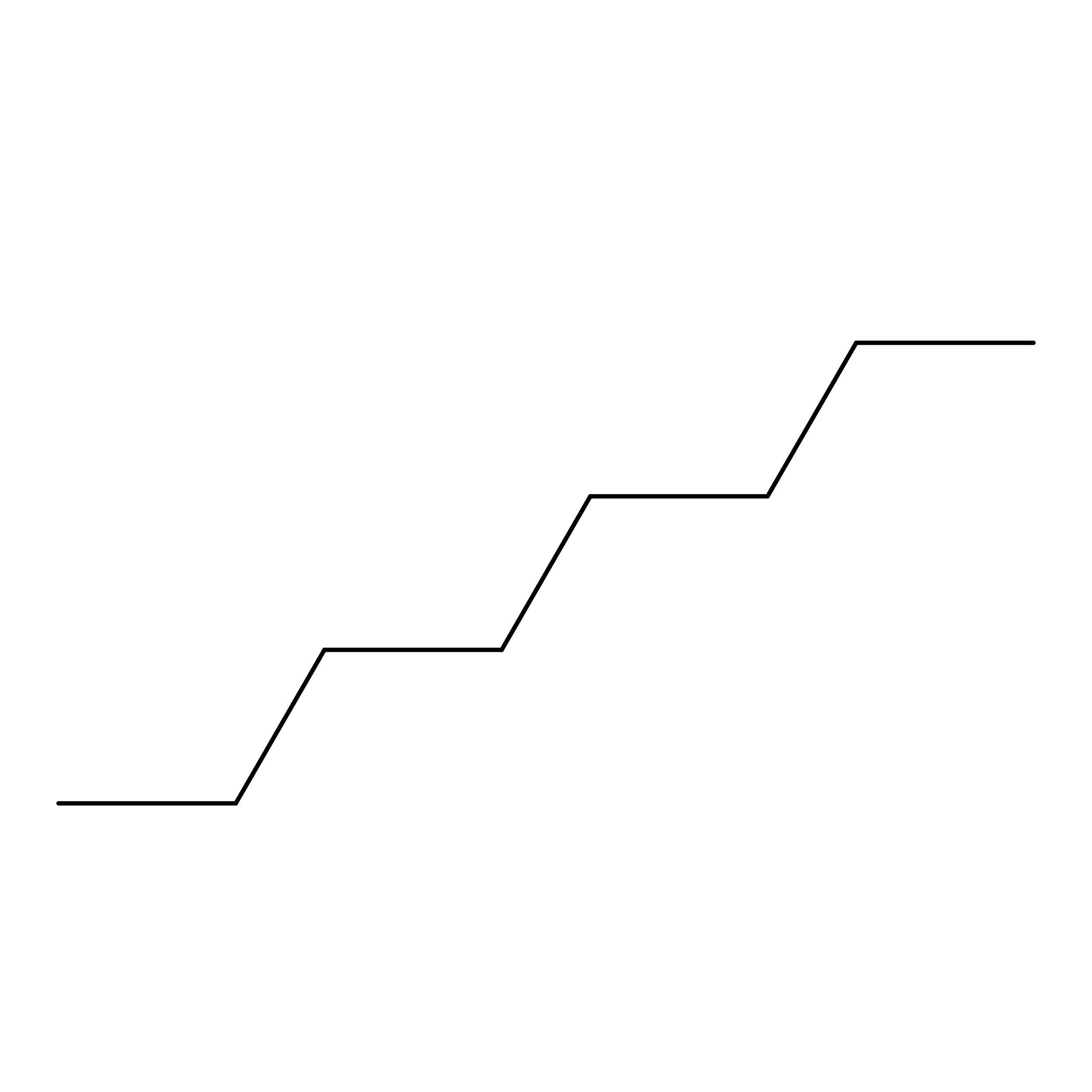
nonane
C9 H20
BKIMMITUMNQMOS-UHFFFAOYSA-N
OCT

Query on OCT


Download:Ideal Coordinates CCD File
IA [auth C]
LA [auth C]
O [auth D]
SA [auth E]
UA [auth E]
IA [auth C],
LA [auth C],
O [auth D],
SA [auth E],
UA [auth E],
V [auth A],
W [auth A]
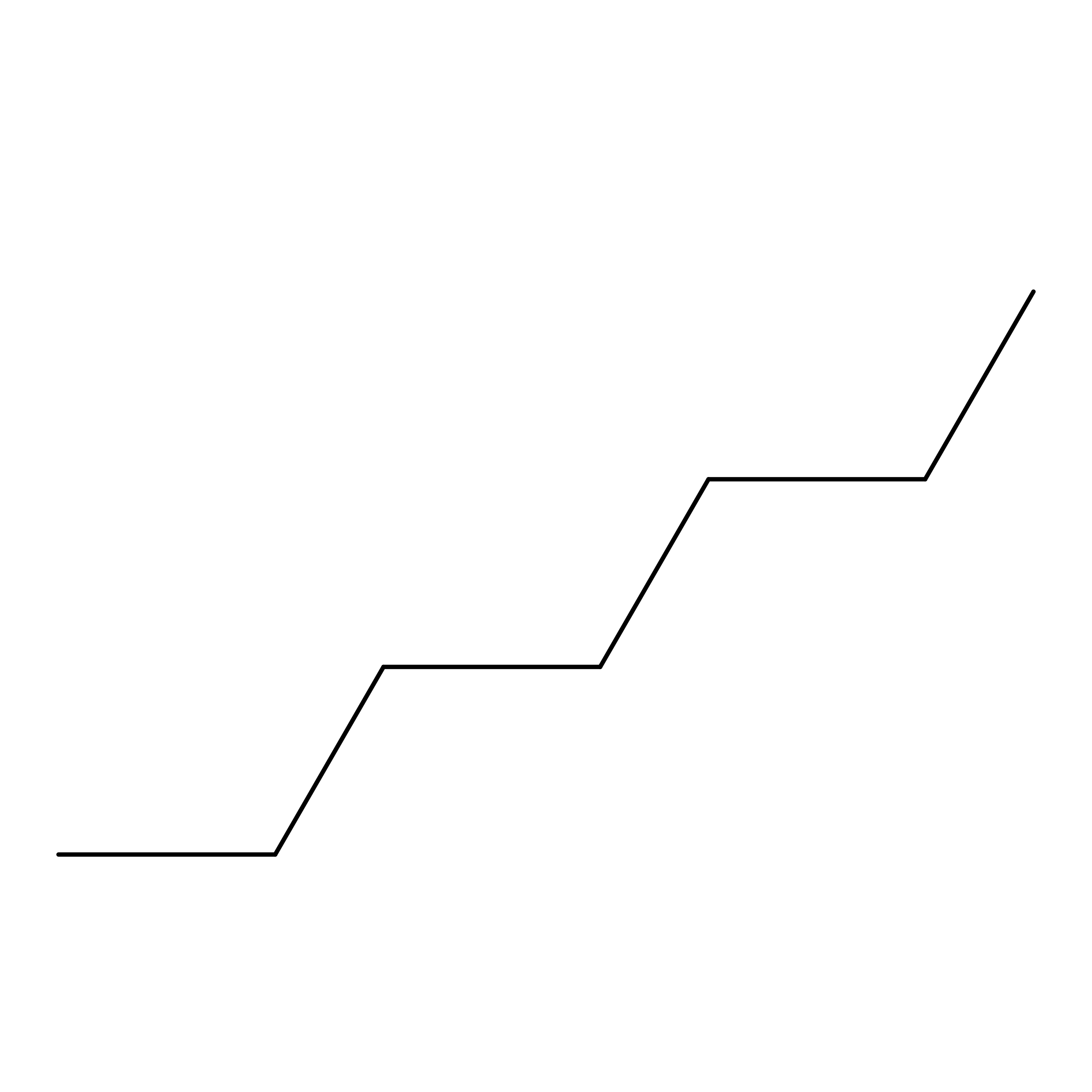
N-OCTANE
C8 H18
TVMXDCGIABBOFY-UHFFFAOYSA-N
HP6

Query on HP6


Download:Ideal Coordinates CCD File
DA [auth B]
H [auth D]
HA [auth C]
JA [auth C]
K [auth D]
DA [auth B],
H [auth D],
HA [auth C],
JA [auth C],
K [auth D],
M [auth D],
N [auth D],
TA [auth E],
VA [auth E]
HEPTANE
C7 H16
IMNFDUFMRHMDMM-UHFFFAOYSA-N
HEX

Query on HEX


Download:Ideal Coordinates CCD File
EA [auth B]
G [auth D]
I [auth D]
J [auth D]
NA [auth C]
EA [auth B],
G [auth D],
I [auth D],
J [auth D],
NA [auth C],
QA [auth E],
R [auth A],
X [auth A],
Y [auth A],
Z [auth B]
HEXANE
C6 H14
VLKZOEOYAKHREP-UHFFFAOYSA-N
GLY

Query on GLY


Download:Ideal Coordinates CCD File
AA [auth B],
FA [auth C],
P [auth A]
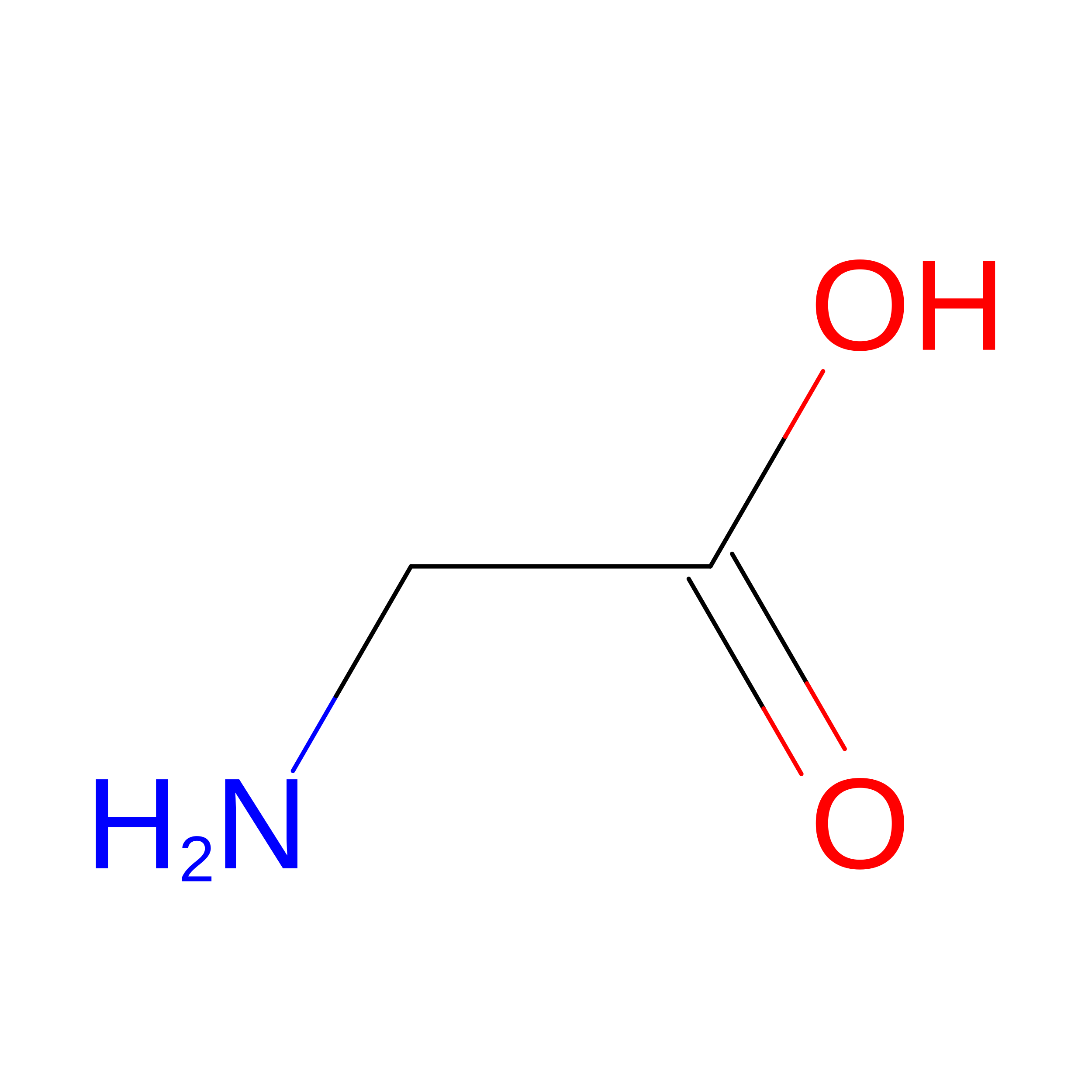
GLYCINE
C2 H5 N O2
DHMQDGOQFOQNFH-UHFFFAOYSA-N
NBU

Query on NBU


Download:Ideal Coordinates CCD File
KA [auth C],
MA [auth C],
U [auth A]
N-BUTANE
C4 H10
IJDNQMDRQITEOD-UHFFFAOYSA-N

Experimental Data & Validation

Experimental Data

  • Method: ELECTRON MICROSCOPY
  • Resolution: 3.90 Å
  • Aggregation State: PARTICLE 
  • Reconstruction Method: SINGLE PARTICLE 
EM Software:
TaskSoftware PackageVersion
MODEL REFINEMENTPHENIX1.19.2_4158:

Structure Validation

View Full Validation Report


Entry History 

& Funding Information

Deposition Data


Funding OrganizationLocationGrant Number
National Institutes of Health/National Cancer Institute (NIH/NCI)United States1R35GM146860

Revision History  (Full details and data files)

  • Version 1.0: 2023-10-11
    Type: Initial release
  • Version 1.1: 2023-10-25
    Changes: Database references
  • Version 1.2: 2023-11-01
    Changes: Database references, Source and taxonomy, Structure summary
  • Version 1.3: 2024-11-20
    Changes: Data collection, Structure summary