Download Mendeley
Molecular basis of vesicular monoamine transport and neurological drug interactions.
Ye, J., Chen, H., Ammerman, A., Wang, Y., Wang, K., Xu, J., Liu, B., Li, W.(2025) Cell Rep 44: 116490-116490
- PubMed: 41166311 Search on PubMedSearch on PubMed Central
- DOI: https://doi.org/10.1016/j.celrep.2025.116490
- Primary Citation Related Structures:
8UCN - PubMed Abstract:
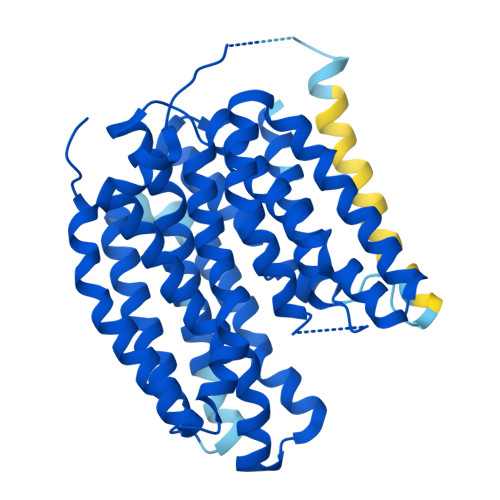
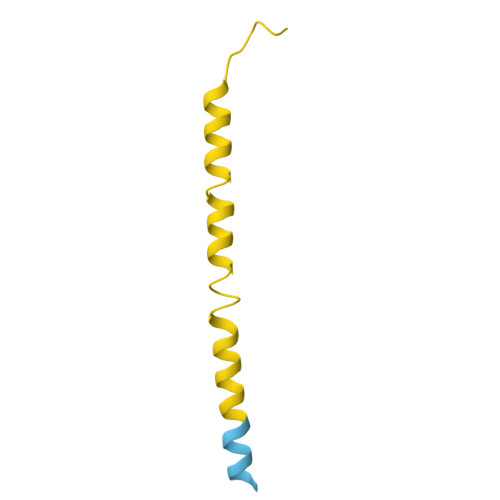
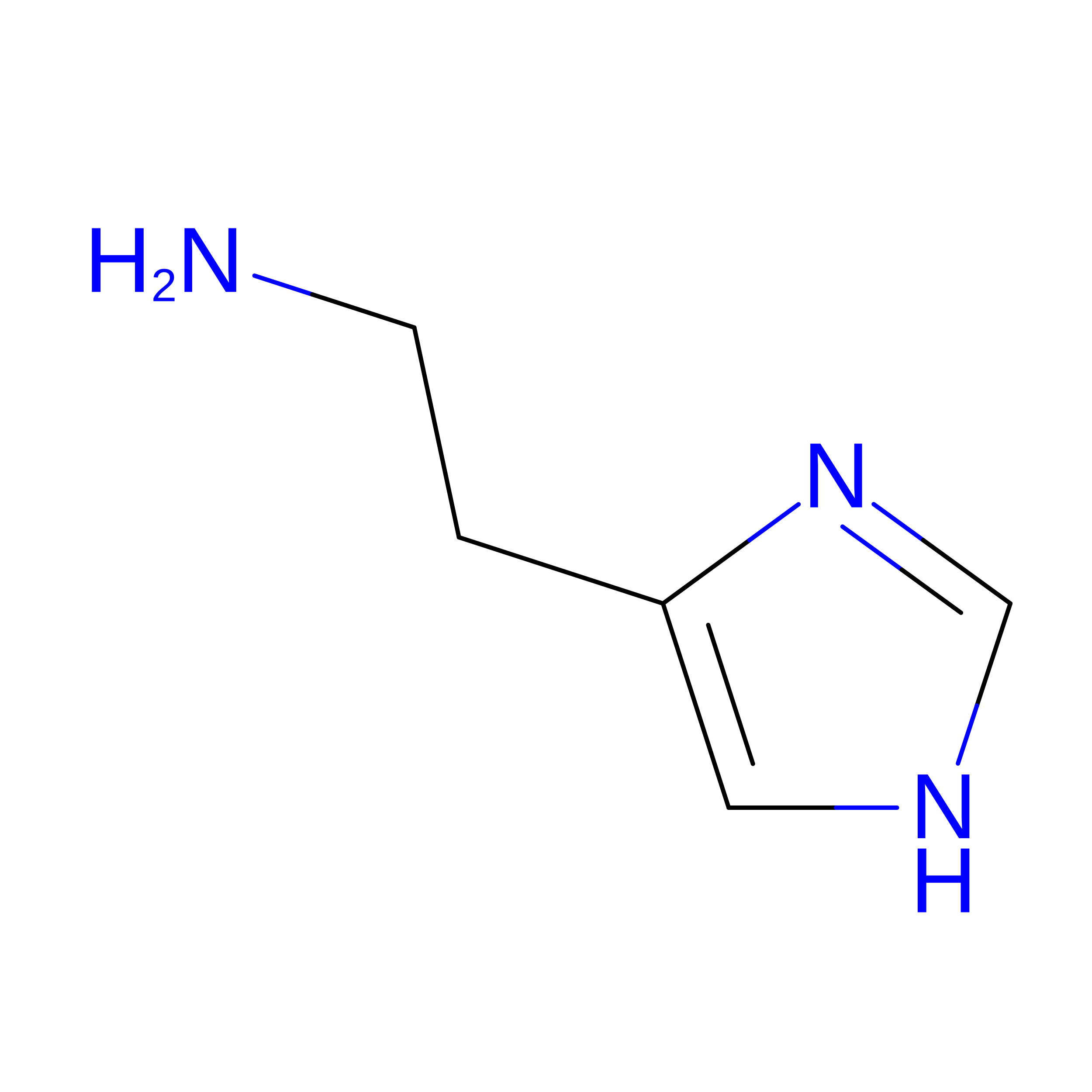
Vesicular monoamine transporter 2 (VMAT2) stores monoamine neurotransmitters in synaptic vesicles to regulate their release. VMAT2 is a primary target in neurological disorder treatment and contributes to amphetamine-induced psychostimulation. Here, we report cryo-electron microscopy structures of human VMAT2 capturing a cytoplasmic-open state with reserpine and lumenal-facing states with serotonin and histamine in open, amphetamine in less open, tetrabenazine in fully occluded, and unbound VMAT2 in partially occluded conformations. This structural flexibility facilitates tetrabenazine binding and proton-driven monoamine accumulation. VMAT2 binds serotonin and histamine in opposite orientations through two negatively charged sites, one functioning in protonation. Amphetamine binds in the same pocket without engaging this protonation site. Liposome-based analyses demonstrate that amphetamine directly induces the release of a fluorescent monoamine analog via VMAT2, consistent with an exchange mechanism underlying psychostimulation. These findings reveal the molecular basis of monoamine storage and drug interactions by VMAT2, informing therapeutic development for neurological diseases and substance abuse.
- Department of Biochemistry and Molecular Biophysics, Washington University School of Medicine, St. Louis, MO 63110, USA.
Organizational Affiliation: