Download Mendeley
High-resolution reconstruction of a C. elegans ribosome sheds light on evolutionary dynamics and tissue specificity.
Sehgal, E., Wohlenberg, C., Soukup, E.M., Viscardi, M.J., Serrao, V.H.B., Arribere, J.A.(2024) RNA 30: 1513-1528
- PubMed: 39209556 Search on PubMedSearch on PubMed Central
- DOI: https://doi.org/10.1261/rna.080103.124
- Primary Citation Related Structures:
9BH5, 9CAI - PubMed Abstract:
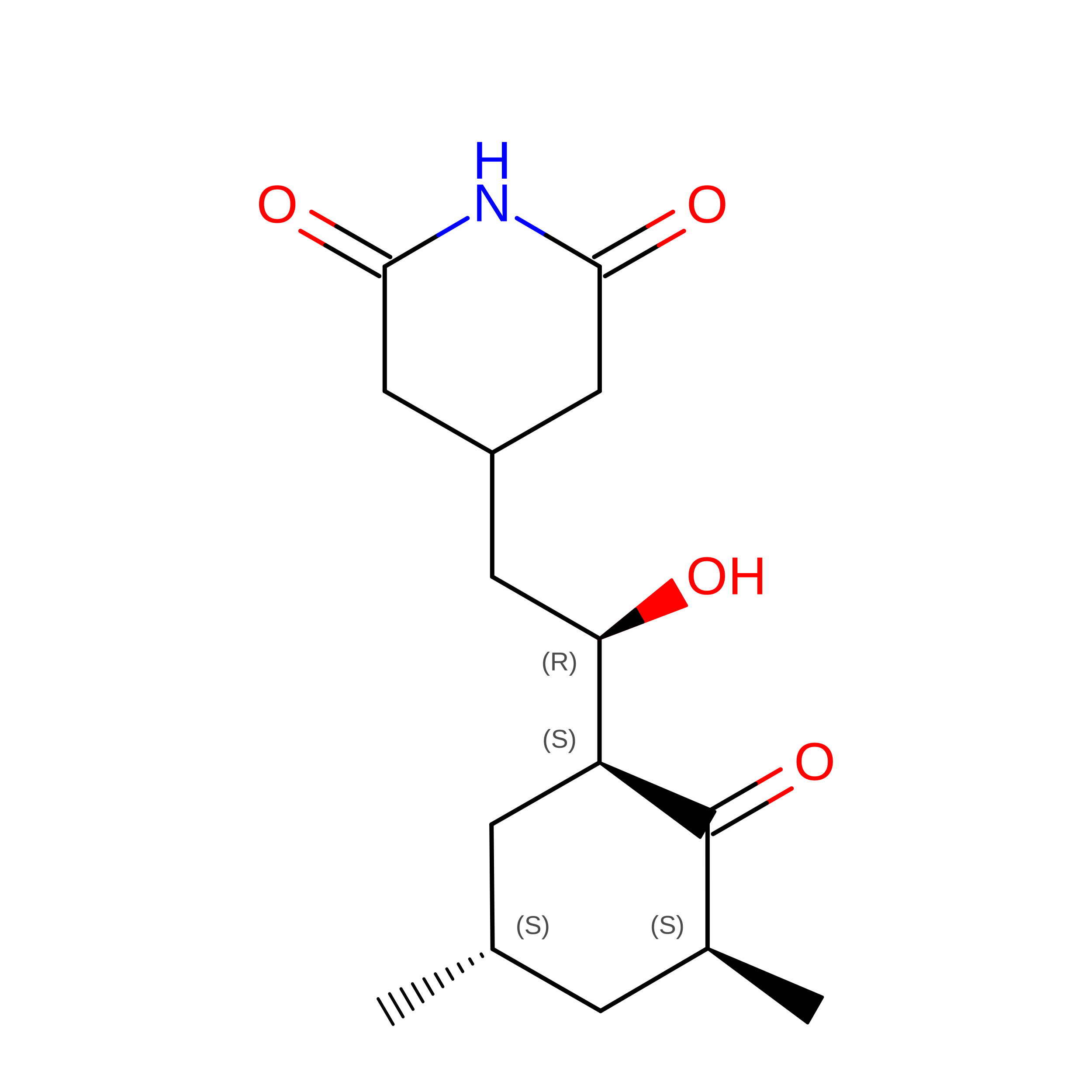
Caenorhabditis elegans is an important model organism for human health and disease, with foundational contributions to the understanding of gene expression and tissue patterning in animals. An invaluable tool in modern gene expression research is the presence of a high-resolution ribosome structure, though no such structure exists for C. elegans Here, we present a high-resolution single-particle cryogenic electron microscopy (cryo-EM) reconstruction and molecular model of a C. elegans ribosome, revealing a significantly streamlined animal ribosome. Many facets of ribosome structure are conserved in C. elegans , including overall ribosomal architecture and the mechanism of cycloheximide, whereas other facets, such as expansion segments and eL28, are rapidly evolving. We identify uL5 and uL23 as two instances of tissue-specific ribosomal protein paralog expression conserved in Caenorhabditis , suggesting that C. elegans ribosomes vary across tissues. The C. elegans ribosome structure will provide a basis for future structural, biochemical, and genetic studies of translation in this important animal system.
- Department of MCD Biology, University of California at Santa Cruz, Santa Cruz, California 95064, USA.
Organizational Affiliation: