Download Mendeley
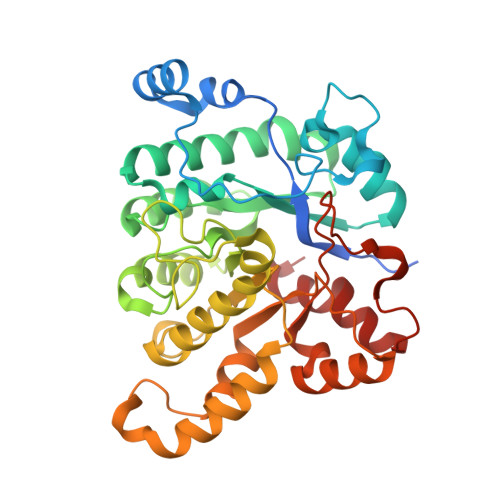
O 2 Activation and Enzymatic C-H Bond Activation Mediated by a Dimanganese Cofactor.
Liu, C., Rao, G., Nguyen, J., Britt, R.D., Rittle, J.(2025) J Am Chem Soc 147: 2148-2157
- PubMed: 39741465 Search on PubMedSearch on PubMed Central
- DOI: https://doi.org/10.1021/jacs.4c16271
- Primary Citation Related Structures:
9BU9, 9BUA - PubMed Abstract:
Dioxygen (O 2 ) is a potent oxidant used by aerobic organisms for energy transduction and critical biosynthetic processes. Numerous metalloenzymes harness O 2 to mediate C-H bond hydroxylation reactions, but most commonly feature iron or copper ions in their active site cofactors. In contrast, many manganese-activated enzymes─such as glutamine synthetase and isocitrate lyase─perform redox neutral chemical transformations and very few are known to activate O 2 or C-H bonds. Here, we report that the dimanganese-metalated form of the cambialistic monooxygenase SfbO (Mn 2 -SfbO) can efficiently mediate enzymatic C-H bond hydroxylation. The activity of the dimanganese form of SfbO toward substrate hydroxylation is comparable to that of its heterobimetallic Mn/Fe form but exhibits distinct kinetic profiles. Kinetic, spectroscopic, and structural studies invoke a mixed-valent dimanganese cofactor (Mn II Mn III ) in O 2 activation and evidence a stoichiometric role for superoxide in maturing an O 2 -inert Mn II 2 cofactor. Computational studies support a hypothesis wherein superoxide addition to the Mn II 2 cofactor installs a critical bridging hydroxide ligand that stabilizes higher-valent manganese oxidation states. These findings establish the viability of proteinaceous dimanganese cofactors in mediating complex, multistep redox transformations.
- Department of Chemistry, University of California, Berkeley, California 94720, United States.
Organizational Affiliation: