Download Mendeley
Defining the Antitumor Mechanism of Action of a Clinical-stage Compound as a Selective Degrader of the Nuclear Pore Complex.
Yuan, L., Ji, W., Dwyer, B.G., Lu, J., Bian, J., Colombo, G.M., Martinez, M.J., Fernandez, D., Phillips, N.A., Tang, M.T., Zhou, C.W., Quispe Calla, N.E., Guzman Huancas, C., Eckart, M., Tran, J., Jones, H.M., Qiu, T., Doench, J.G., Rees, M.G., Roth, J.A., Cameron, M.D., Charville, G.W., Kuo, C.J., Dixon, S.J., Zhang, T., Hinshaw, S.M., Gray, N.S., Corsello, S.M.(2025) Cancer Discov 15: 2505-2529
- PubMed: 40891634
- DOI: https://doi.org/10.1158/2159-8290.CD-25-0271
- Primary Citation of Related Structures:
9EK5 - PubMed Abstract:
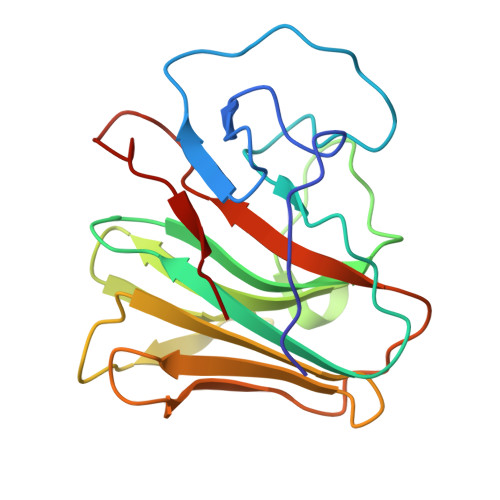
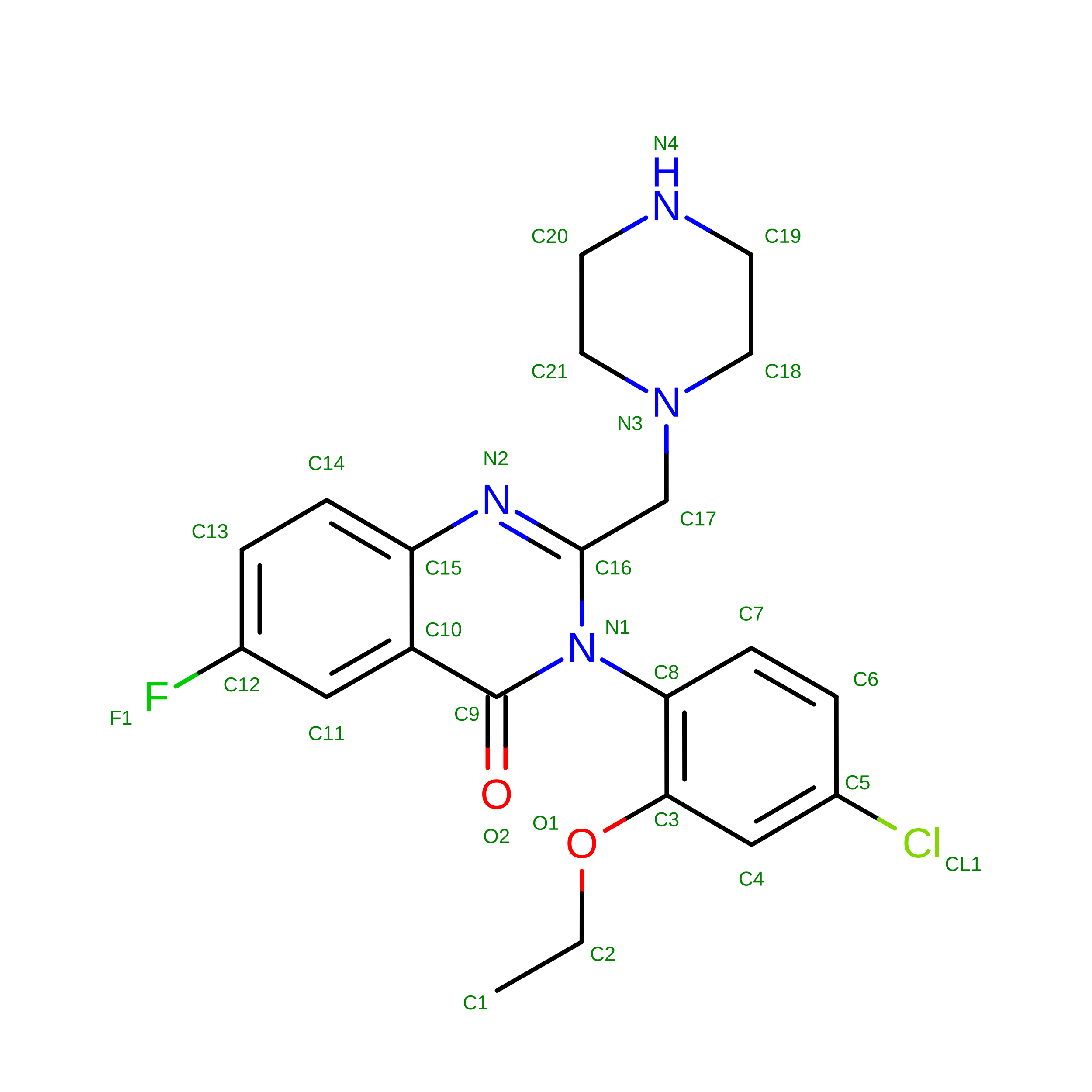
Cancer cells are acutely dependent on nuclear transport due to elevated transcriptional activity, suggesting an unrealized opportunity for selective therapeutic inhibition of the nuclear pore complex (NPC). Through large-scale phenotypic profiling of cancer cell lines, genome-scale functional genomic modifier screens, and mass spectrometry-based proteomics, we discovered that the clinical drug PRLX-93936 is a molecular glue that binds and reprograms the TRIM21 ubiquitin ligase to degrade the NPC. Upon compound-induced TRIM21 recruitment, the nuclear pore is ubiquitylated and degraded, resulting in the loss of short-lived cytoplasmic mRNA transcripts and the induction of cancer cell apoptosis. Direct compound binding to TRIM21 was confirmed via surface plasmon resonance and X-ray crystallography, whereas compound-induced TRIM21-nucleoporin complex formation was demonstrated through multiple orthogonal approaches in cells and in vitro. Phenotype-guided optimization yielded compounds with 10-fold greater potency and drug-like properties, along with robust pharmacokinetics and efficacy against pancreatic cancer xenografts and patient-derived organoids. This study establishes the cancer therapeutic potential of optimized TRIM21 molecular glues to degrade the NPC and underscores the value of reexamining drugs with previously unknown mechanisms using current technologies.
- Division of Oncology, Department of Medicine, Stanford School of Medicine, Stanford, California.
Organizational Affiliation: