Download Mendeley
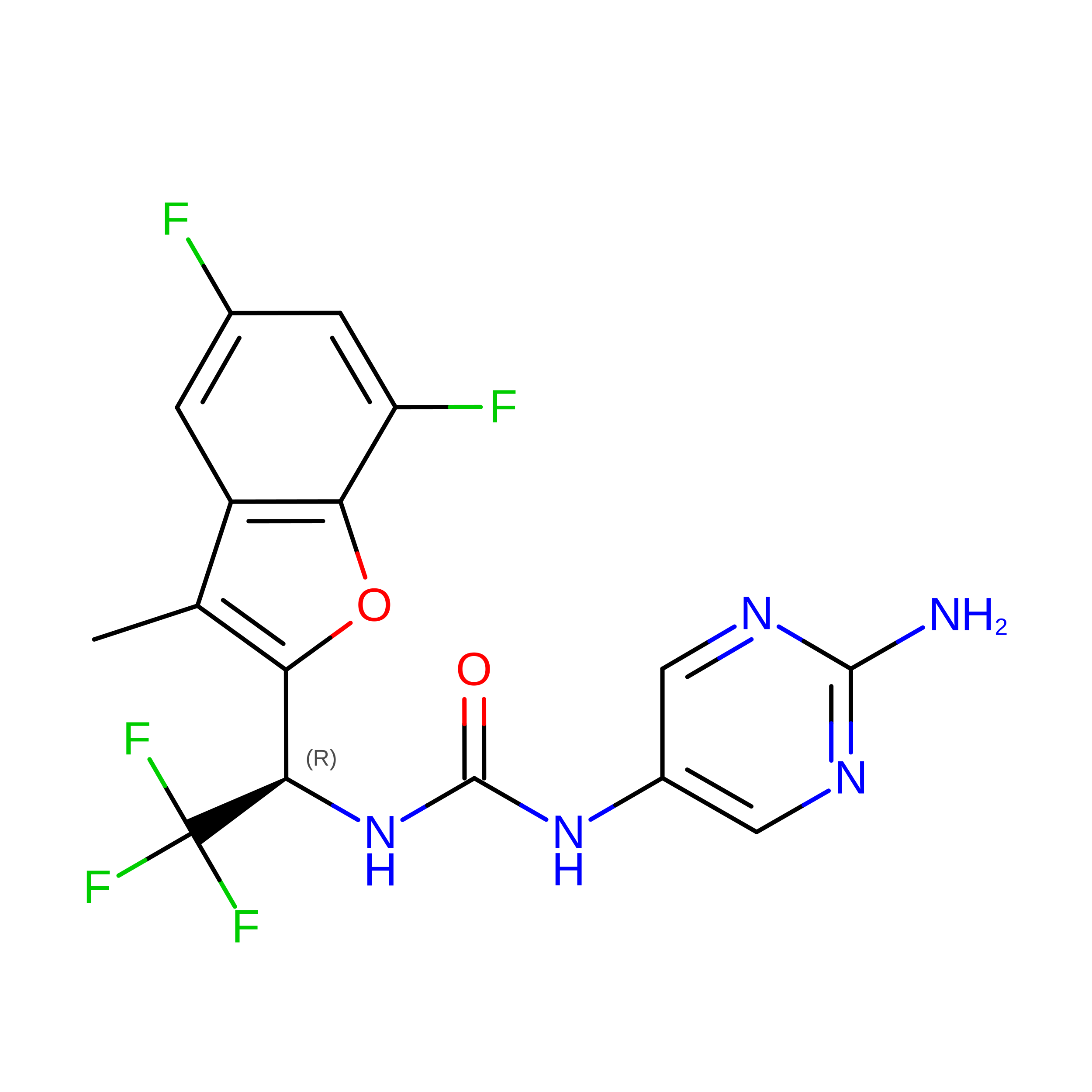
Molecular architecture responsible for specific inhibition of oncogenic PI3K alpha mutants by RLY-2608 and STX-478.
Liu, X., Chen, Y., Li, G., Chen, A., Zhou, Q., Wang, M.W.(2026) Acta Pharm Sin B 16: 5884-5900
- PubMed: 42764855 Search on PubMedSearch on PubMed Central
- DOI: https://doi.org/10.1016/j.apsb.2026.07.003
- Primary Citation Related Structures:
9XW5, 9XW7, 9XW8 - PubMed Abstract:
Hotspot mutations in phosphoinositide 3-kinase alpha (PI3K α ), such as H1047R, E542K, and E545K, drive tumorigenesis across multiple cancer types. Orthosteric PI3K α inhibitors are effective but have toxicity against wild-type PI3K α , the emergence of resistance, and a narrow therapeutic index. Allosteric inhibitors such as RLY-2608 and STX-478 offer a promising path toward mutant-specific suppression, yet the structural basis for their selectivity and mechanisms of action remain elusive. Here, we report high-resolution cryogenic electron microscopy structures of RLY-2608- and STX-478-bound H1047R, E542K, and E545K, revealing a shared cryptic allosteric pocket, accessible only through a major conformational rearrangement of the activation loop that is stabilized in oncogenic mutants. While both inhibitors occupy this pocket, they have distinct interaction networks and propagate divergent allosteric activities: RLY-2608 induces large-scale remodeling of catalytic and membrane-interacting elements, whereas STX-478 reinforces autoinhibitory interfaces between p110 α and p85 α subunits. Comparative analysis provides structural insights into their differentiated potency and selectivity.
- Department of Pharmacology, School of Basic Medical Sciences, Fudan University, Shanghai 200032, China.
Organizational Affiliation: