Download Mendeley
Discovery of AVI-6451, a Potent and Selective Inhibitor of the SARS-CoV-2 ADP-Ribosylhydrolase Mac1 with Oral Efficacy In Vivo.
Jaishankar, P., Correy, G.J., Matsui, Y., Togo, T., Rachman, M.M., Stevens, M.G.V., Hantz, E.R., Zheng, J., Diolaiti, M.E., Montano, M., Taha, T.Y., Rosecrans, J., Pampel, J., Krogan, N.J., Shoichet, B.K., Ashworth, A., Ott, M., Fraser, J.S., Renslo, A.R.(2026) J Med Chem 69: 553-573
- PubMed: 41406955 Search on PubMedSearch on PubMed Central
- DOI: https://doi.org/10.1021/acs.jmedchem.5c02933
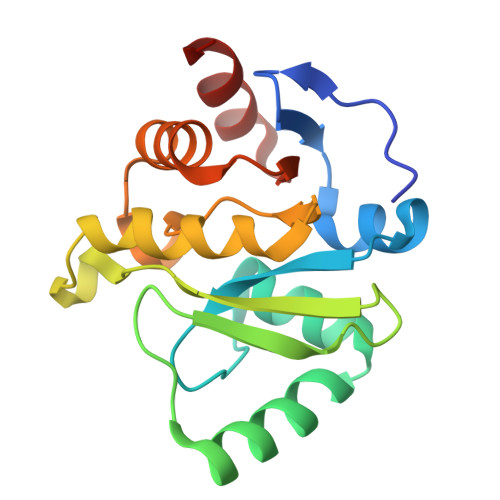
- Primary Citation Related Structures:
9YKH - PubMed Abstract:
The COVID-19 pandemic emphasized the need for effective antivirals acting at new targets. We recently described AVI-4206, a 9 H -pyrimido[4,5- b ]indole-based inhibitor of the SARS-CoV-2 macrodomain Mac1, an ADP-ribosylhydrolase thought to blunt the host immune response to viral infection. While AVI-4206 represents the first Mac1 inhibitor to demonstrate in vivo efficacy in mouse infection models, its low oral bioavailability necessitated IP administration. Herein, we describe an extensive medicinal chemistry campaign to identify new leads with improved cellular permeability and high oral bioavailability. Various tactics were employed toward these ends, including an exploration of urea isosteres to reduce hydrogen bond donor count and total polar surface area. These efforts ultimately produced AVI-6451, a potent Mac1 inhibitor with low intrinsic clearance and high oral bioavailability that achieves superior antiviral efficacy with once-daily oral administration in a mouse model of SARS-CoV-2 infection.
- Department of Pharmaceutical Chemistry, University of California, San Francisco, 600 16th Street, San Francisco, California 94158, United States.
Organizational Affiliation: