Download Mendeley
Clamp conformational flexibility and dynamics in archaeal and eukaryotic RNA polymerases revealed by cryo-EM.
Fordjour, G.N.R., Palao 3rd, L., Murakami, K., Armache, J.P., Murakami, K.S.(2026) J Biol Chem : 113389-113389
- PubMed: 42551829 Search on PubMed
- DOI: https://doi.org/10.1016/j.jbc.2026.113389
- Primary Citation Related Structures:
9ZO4, 9ZO5, 9ZOF, 9ZOH, 9ZPK, 9ZPL - PubMed Abstract:
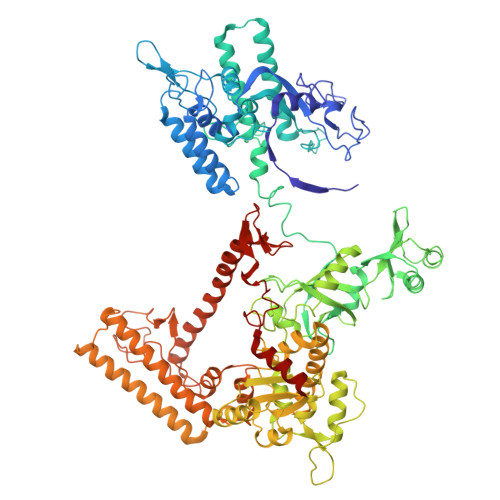
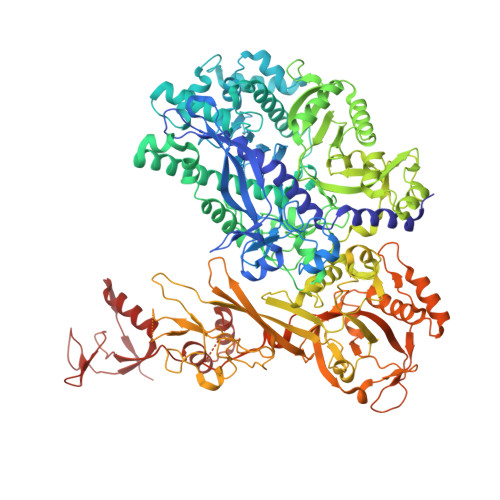
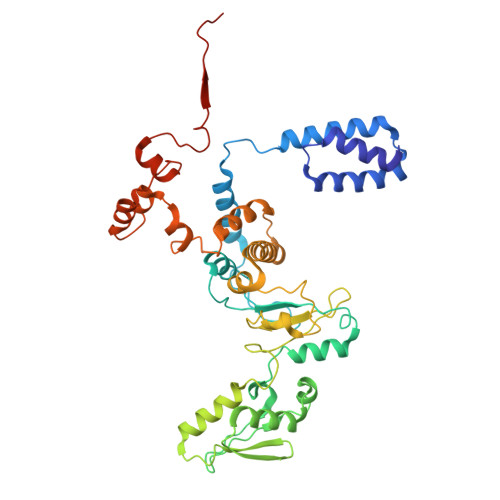
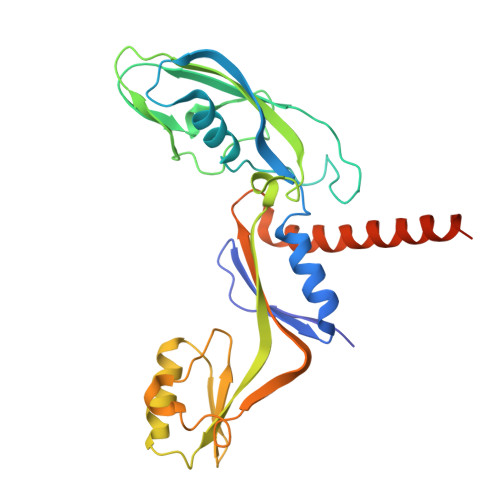
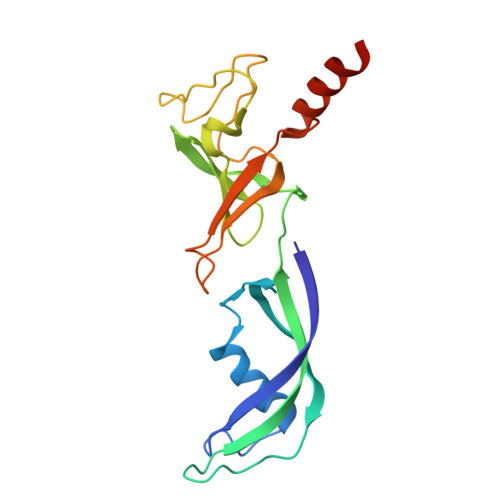
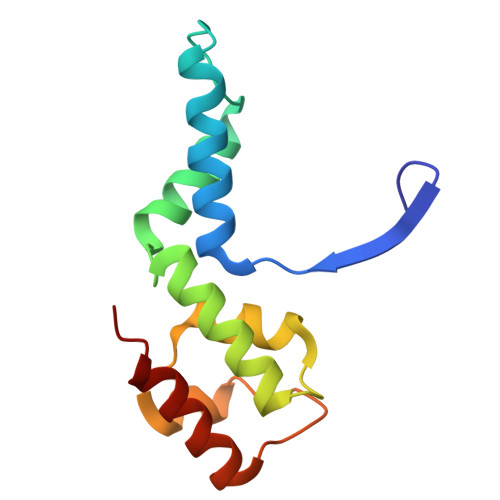
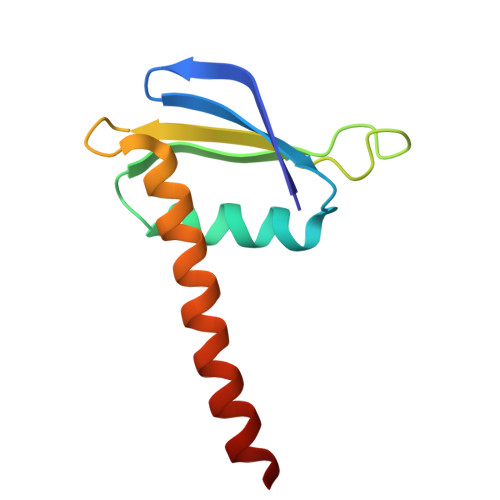
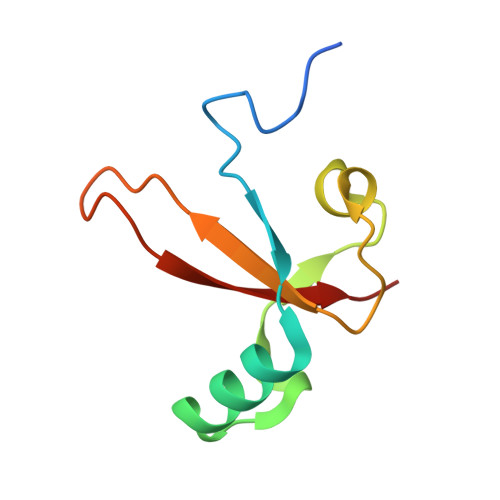
All cellular RNA polymerases (RNAPs) across Bacteria, Archaea, and Eukarya share a conserved catalytic core, yet bacterial and archaeal-eukaryotic RNAPs diverged after separation from the last universal common ancestor. This evolutionary split produced distinct subunit compositions and fundamentally different requirements for external factors during transcription initiation. Bacterial RNAP relies on a σ factor, whereas archaeal-eukaryotic RNAPs require a more extensive set of general transcription factors (GTFs) to bind promoter DNA, unwind the duplex, and position the template strand within the active site cleft. Notably, despite the close structural similarity between archaeal and eukaryotic RNAPs, the requirement for GTFs became further specialized after the emergence of Eukarya. This divergence raises the question of whether differences in intrinsic conformational flexibility and dynamics of these RNAPs contribute to distinct promoter-loading pathways. In this study, we addressed this question using cryo-electron microscopy (cryo-EM) to examine archaeal RNAPs from Euryarchaeota and Crenarchaeota alongside yeast RNAP II. Archaeal RNAP displays a highly dynamic DNA binding clamp domain that samples a broad spectrum of open and closed states, whereas RNAP II predominantly adopts a closed clamp state. Both archaeal and eukaryotic RNAPs can be found in stalk-bound and stalk-less forms. Comparative structural analyses further reveal a unique conformational transition in crenarchaeal RNAP associated with clamp opening. Together, these findings define the intrinsic clamp-conformational landscapes across the archaeal-eukaryotic lineage and suggest that evolutionary tuning of clamp flexibility and dynamics contributes to distinct GTF-dependent promoter-loading mechanisms.
- Department of Biochemistry and Molecular Biology, Penn State University, University Park, PA 16802, USA; Huck Institutes of the Life Sciences, Center for Structural Biology, Penn State University, University Park, PA 16802, USA; Huck Institutes of the Life Sciences, Center for RNA Molecular Biology, Penn State University, University Park, PA 16802, USA; Huck Institutes of the Life Sciences, Center for Eukaryotic Gene Regulation, Penn State University, University Park, PA 16802, USA; Molecular Machines Mechanism and Structure Predoctoral Training Program, Penn State University, University Park, PA 16802, USA.
Organizational Affiliation: