7OFV | pdb_00007ofv

NMR-guided design of potent and selective EphA4 agonistic ligands


Experimental Data Snapshot

  • Method: X-RAY DIFFRACTION
  • Resolution: 1.43 Å
  • R-Value Free: 
    0.206 (Depositor), 0.203 (DCC) 
  • R-Value Work: 
    0.149 (Depositor) 

Starting Model: experimental
View more details

wwPDB Validation 3D Report Full Report

Validation slider image for 7OFV

This is version 1.2 of the entry. See complete history

Literature

NMR-Guided Design of Potent and Selective EphA4 Agonistic Ligands.

Baggio, C.Kulinich, A.Dennys, C.N.Rodrigo, R.Meyer, K.Ethell, I.Pellecchia, M.

(2021) J Med Chem 64: 11229-11246

  • DOI: https://doi.org/10.1021/acs.jmedchem.1c00608
  • Primary Citation Related Structures: 
    7OFV

  • PubMed Abstract: 

    In this paper, we applied an innovative nuclear magnetic resonance (NMR)-guided screening and ligand design approach, named focused high-throughput screening by NMR (fHTS by NMR), to derive potent, low-molecular-weight ligands capable of mimicking interactions elicited by ephrin ligands on the receptor tyrosine kinase EphA4. The agents bind with nanomolar affinity, trigger receptor activation in cellular assays with motor neurons, and provide remarkable motor neuron protection from amyotrophic lateral sclerosis (ALS) patient-derived astrocytes. Structural studies on the complex between EphA4 ligand-binding domain and a most active agent provide insights into the mechanism of the agents at a molecular level. Together with preliminary in vivo pharmacology studies, the data form a strong foundation for the translation of these agents for the treatment of ALS and potentially other human diseases.


  • Organizational Affiliation
    • Division of Biomedical Sciences, School of Medicine, University of California, Riverside, 900 University Avenue, Riverside, California 92521, United States.

Macromolecule Content 

  • Total Structure Weight: 22.28 kDa 
  • Atom Count: 1,894 
  • Modeled Residue Count: 190 
  • Deposited Residue Count: 191 
  • Unique protein chains: 2

Macromolecules

Find similar proteins by:|  3D Structure
Entity ID: 1
MoleculeChains  Sequence LengthOrganismDetailsImage
Ephrin type-A receptor 4185Homo sapiensMutation(s): 1 
Gene Names: EPHA4HEK8SEKTYRO1
EC: 2.7.10.1
UniProt & NIH Common Fund Data Resources
Find proteins for P54764 (Homo sapiens)
Explore P54764 
Go to UniProtKB:  P54764
PHAROS:  P54764
GTEx:  ENSG00000116106 
Entity Groups
Sequence Clusters30% Identity50% Identity70% Identity90% Identity95% Identity100% Identity
UniProt GroupP54764
Sequence Annotations
Expand
Reference Sequence
Find similar proteins by:  Sequence   |   3D Structure  
Entity ID: 2
MoleculeChains  Sequence LengthOrganismDetailsImage
EphA4 agonist ligand6synthetic constructMutation(s): 0 

Small Molecules

Ligands 1 Unique
IDChains Name / Formula / InChI Key2D Diagram3D Interactions
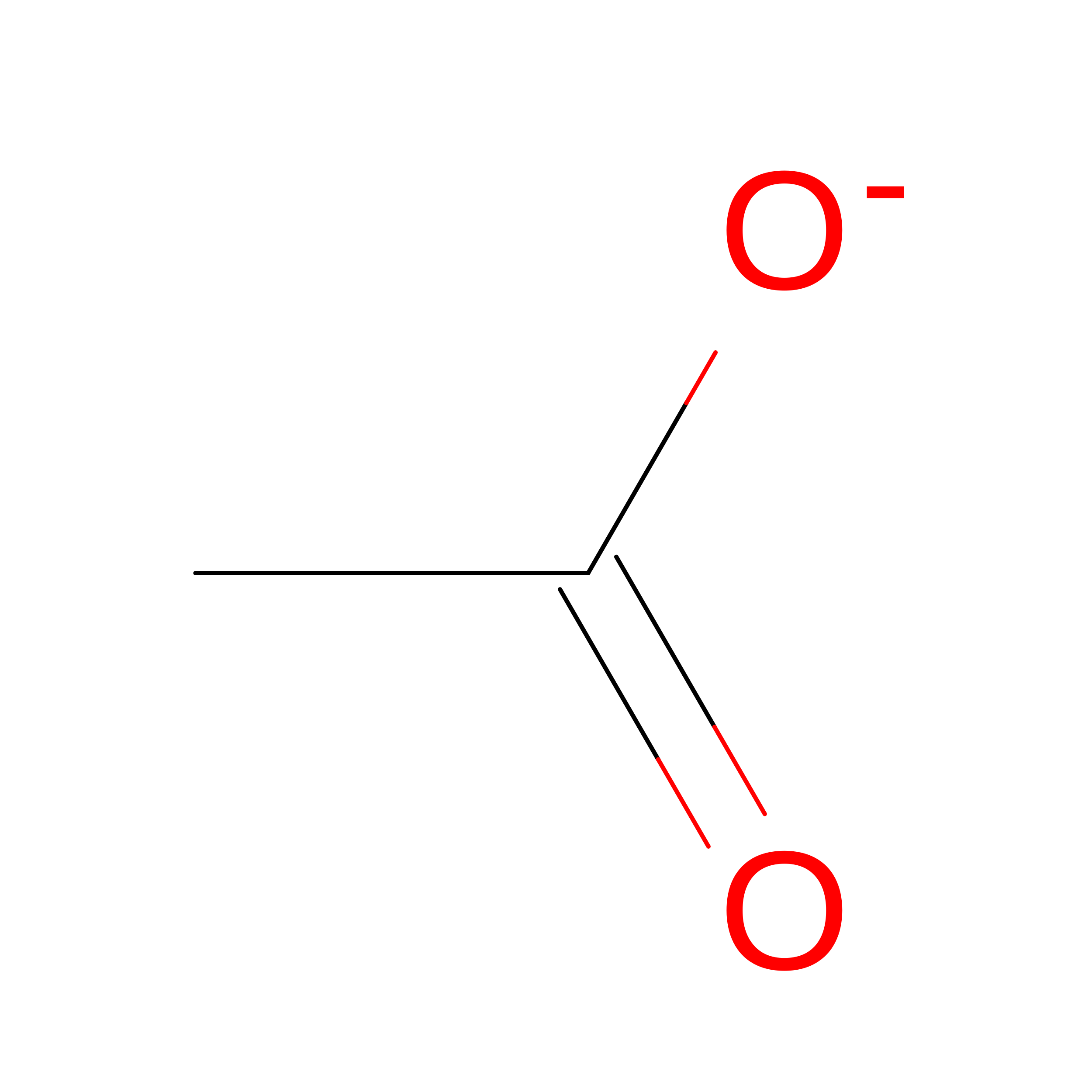
ACT

Query on ACT


Download:Ideal Coordinates CCD File
C [auth B]ACETATE ION
C2 H3 O2
QTBSBXVTEAMEQO-UHFFFAOYSA-M
Modified Residues  3 Unique
IDChains TypeFormula2D DiagramParent
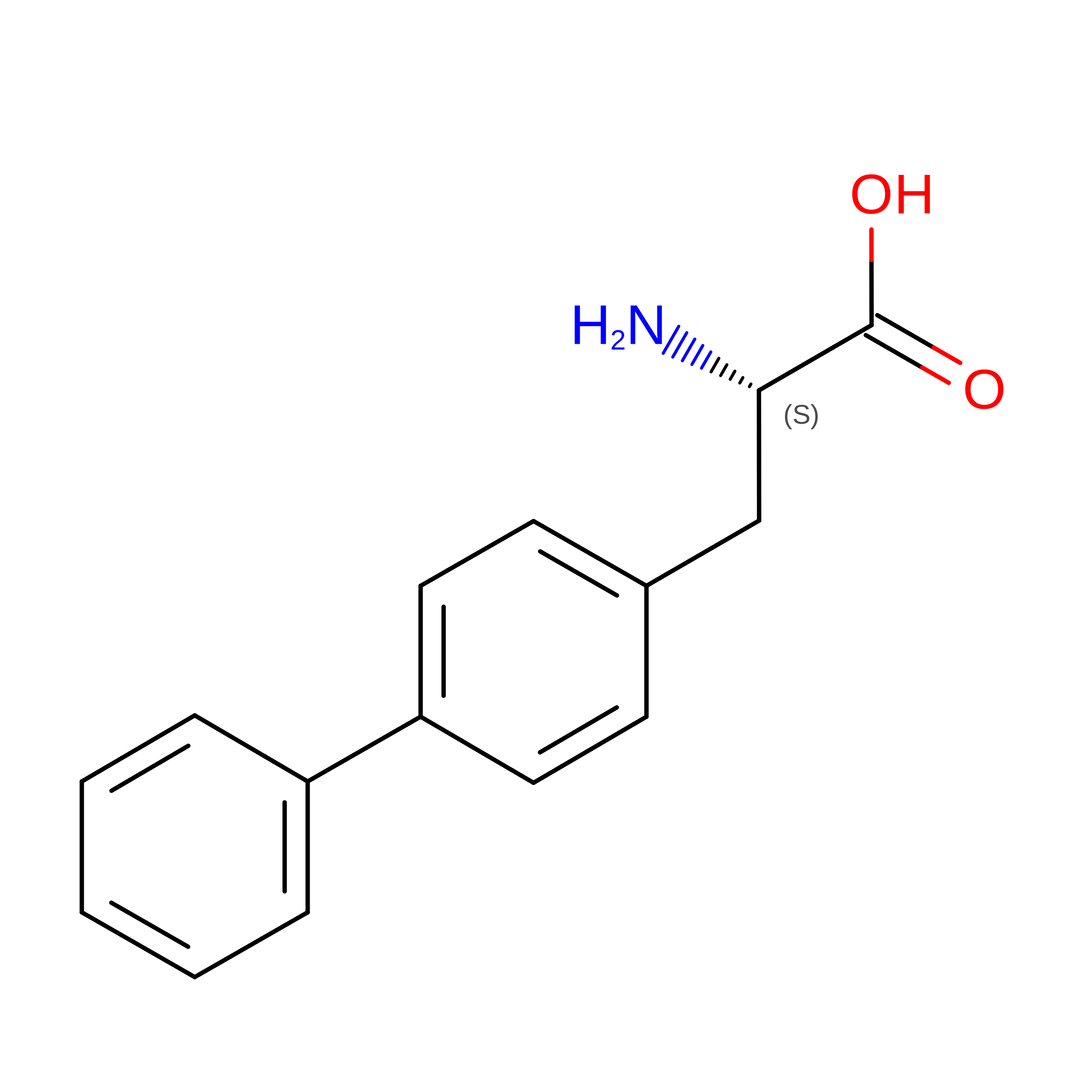
4PQ
Query on 4PQ
B
L-PEPTIDE LINKINGC11 H12 N2 O3TRP
BIF
Query on BIF
B
L-PEPTIDE LINKINGC15 H15 N O2PHE
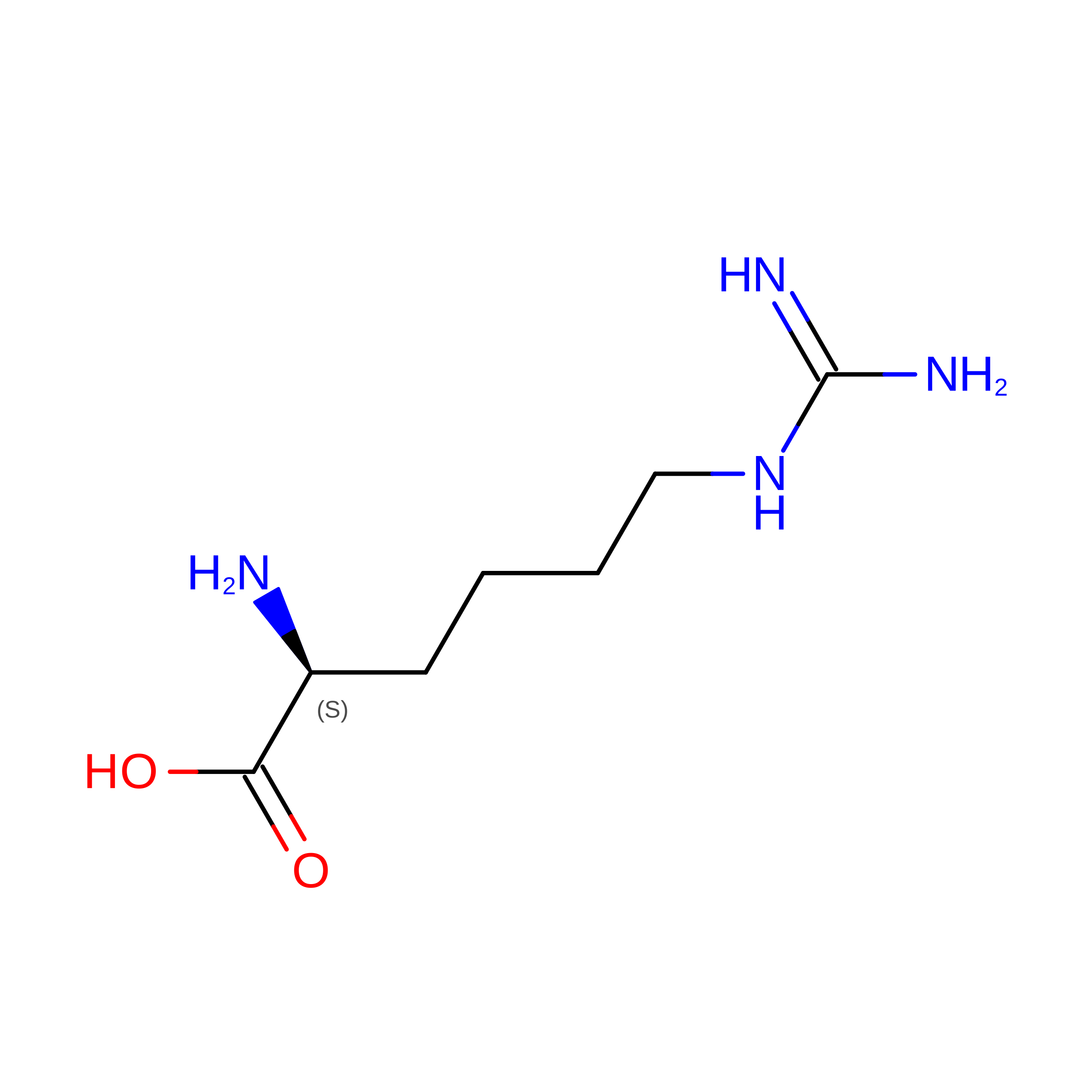
HRG
Query on HRG
B
L-PEPTIDE LINKINGC7 H16 N4 O2ARG
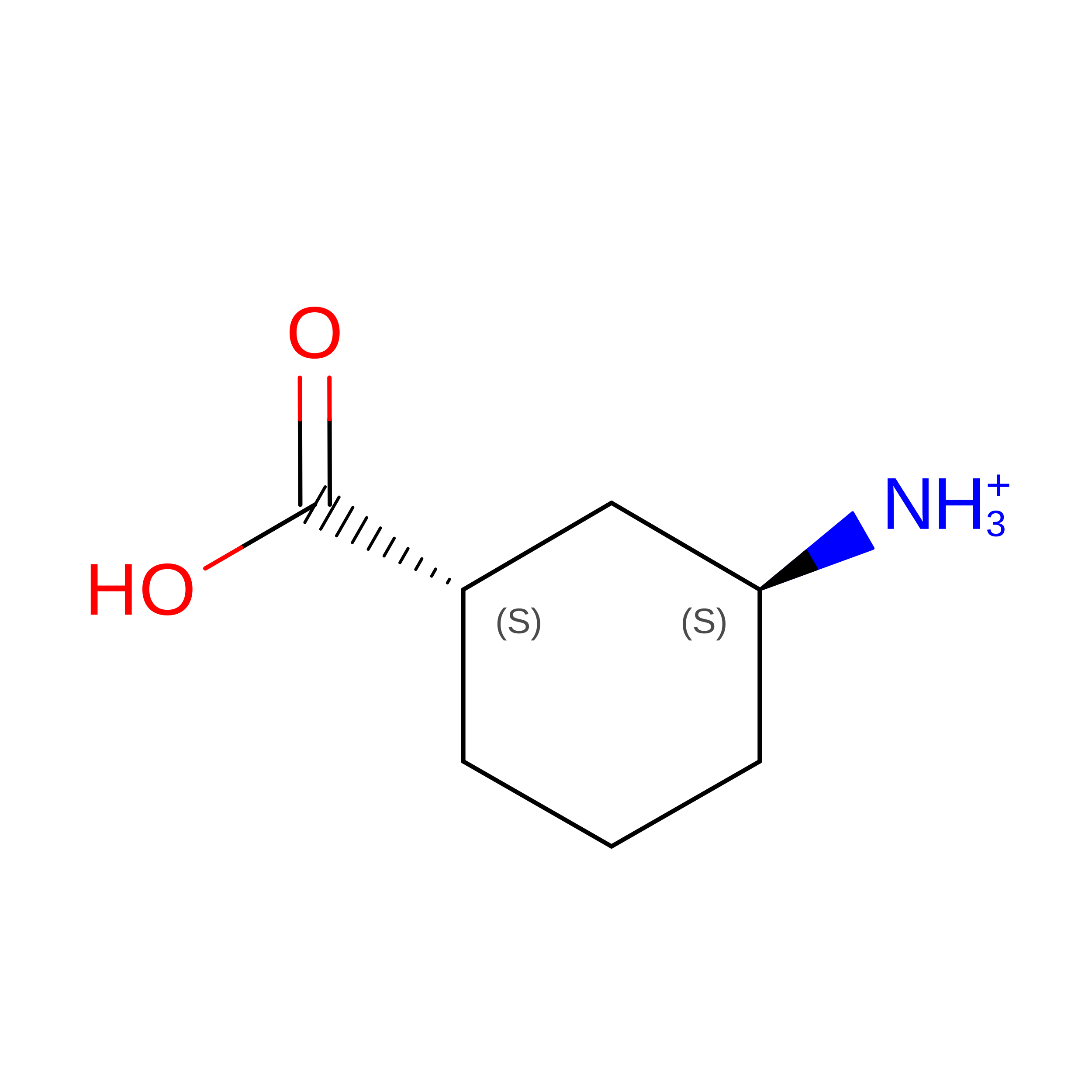
VDK
Query on VDK
B
PEPTIDE LINKINGC7 H14 N O2

--

Experimental Data & Validation

Experimental Data

  • Method: X-RAY DIFFRACTION
  • Resolution: 1.43 Å
  • R-Value Free:  0.206 (Depositor), 0.203 (DCC) 
  • R-Value Work:  0.149 (Depositor) 
Space Group: P 43 21 2
Unit Cell:
Length ( Å )Angle ( ˚ )
a = 55.032α = 90
b = 55.032β = 90
c = 147.313γ = 90
Software Package:
Software NamePurpose
REFMACrefinement
autoPROCdata reduction
autoPROCdata scaling
PHASERphasing

Structure Validation

View Full Validation Report


Entry History 

& Funding Information

Deposition Data


Funding OrganizationLocationGrant Number
National Institutes of Health/National Institute of Neurological Disorders and Stroke (NIH/NINDS)United StatesNS107479

Revision History  (Full details and data files)

  • Version 1.0: 2021-08-11
    Type: Initial release
  • Version 1.1: 2021-08-25
    Changes: Database references
  • Version 1.2: 2024-01-31
    Changes: Data collection, Derived calculations, Refinement description